Many people are going a little Black Panther crazy. I understand the impulse. The film looks dope:
Now, I have not seen it yet but before I do I wanted to provide a little context for the remarks I will make after I have seen it. In my 1997 piece, "Black is the Color of my Comic Book Character: African American Superheroes from 1970-1994" (first in Inks and in a book chapter in Drawing the Line: Comics Studies and INKS, 1994-1997) I identified all black characters that have had their own comic or at least a prominent role within one over a 24 year period and examined the comics individually. This search included some well known companies: ANIA, Big City Comics, DC comics, Image, Marvel Comics Group and Milestone, as well as some less well known: Acme comics, Axis, Eclipse Comics, Flatline Comics, Megaton Comics, Omega7 and Onli. Each of these has featured black superheroes at some time and thus they served as an appropriate laboratory for examination. I present some of the highlights below. I'm not sure of any analyses that did something similar from 1995 to the present.
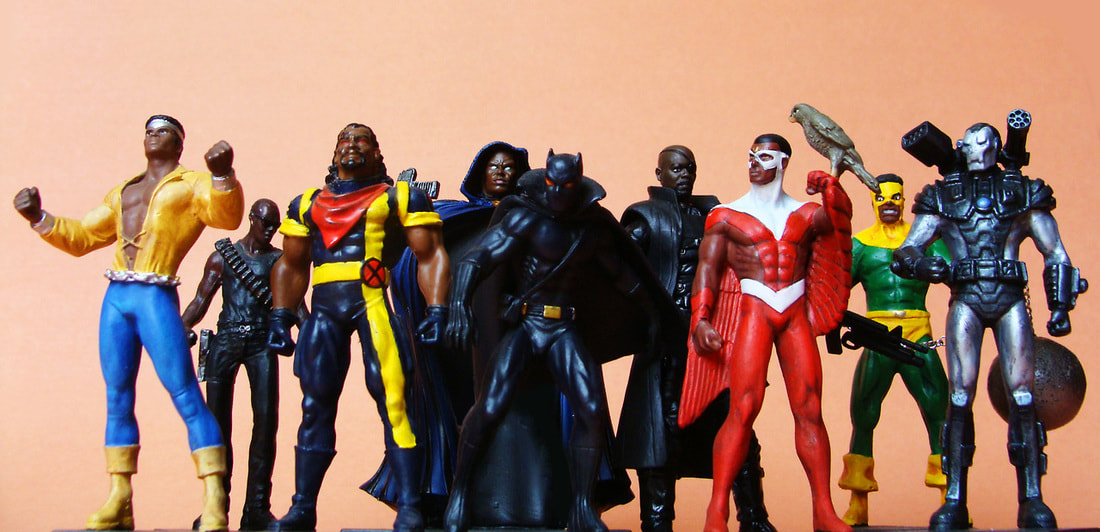
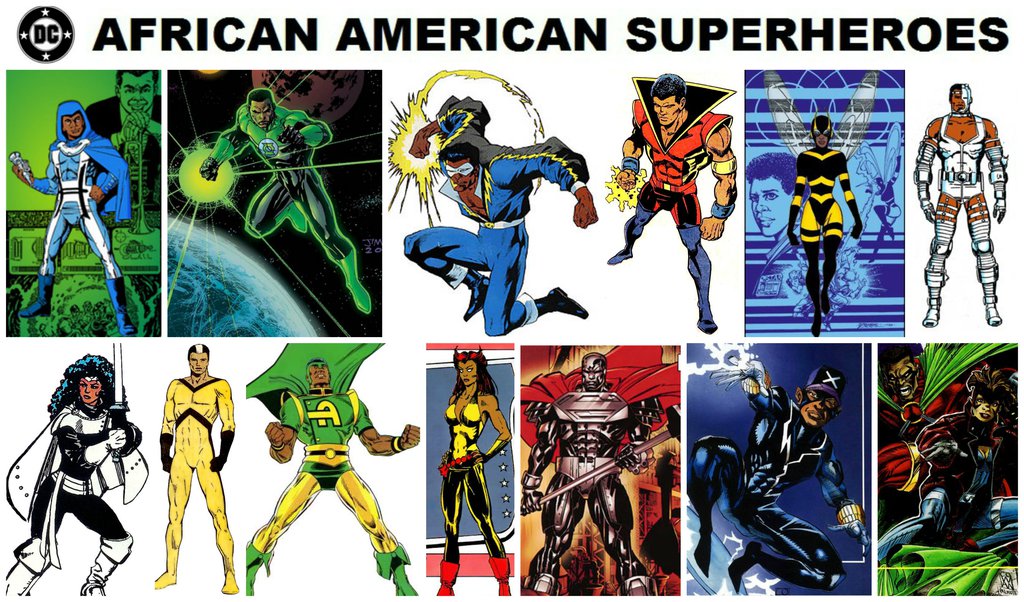
In my analysis, I addressed the specific attributes of the character(s) depicted. Particularly, there were four factors considered:
- 1) demeanor and physical presence. This concerns gender, the physical build of the latter and the type of superpowers the character has;
- 2) a geographic component one, where I identify where the story takes place, as well as an employment component, where I identify what type of job (if any) the character has;
- 3) relationships with others; specifically, the relationship between threatening and non-threatening interactions as well as the manner in which different characters communicate with one another; and,
- 4) the use of powers. This would include as an assessment of the relative balance between acts of brute force, athleticism and intelligence, the type of problems they address within the comic (crime, violence, unemployment, discrimination, domination, etc.) and also the target of that threat (against the character, their neighborhood, their city, their region, their nation, their planet, their universe).
General
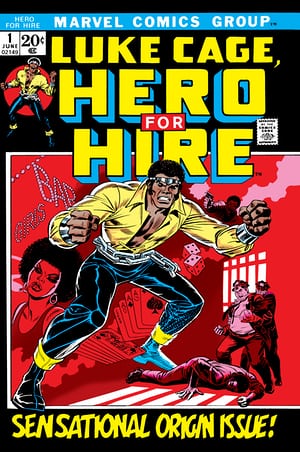
When considering the topic of black superheroes, it is important to note that the most notable feature of the industry is the relatively small number of black characters that have appeared in the comics overtime. Since the first appearance of Luke Cage in 1972 there have only been about 42 black characters featured; 32 of which have appeared prominently in the last 4 years of my study: Bishop (from the X-Men), Black Panther, Brotherman, Captain Marvel, Cloak (from Cloak and Dagger), Ebony Warrior, Flatbush Native, Hardware, Horus (son of Osiris), Icon, John Stewart as Green Lantern, Jim Rhodes as War Machine, Megaton, Meteor Man, Nighthrasher, Nightwatch, 5 members of the group Numidian Force, Original Man, Purge, Rocket (Icon's partner), Shadowhawk, Steel, Static, Sustah-Girl, 4 members of the group Tribe and Zwanna (son of Zulu).
The characters themselves are not always easy to identify. Aside from the fact that many of them wear costumes, which makes it difficult to see their race/identity:
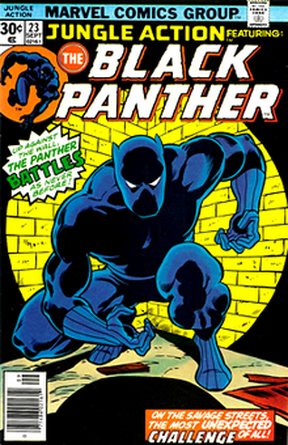
In addition to these factors, the timing of the characters appearances have also been somewhat difficult to index. In the 24 year-period under examination, Luke Cage appeared in three different series (Luke Cage: Hero for Hire, Luke Cage, Powerman and Cage) spanning by far the longest time period (from 1972 to 1993); the Black Panther has appeared in three different series (Jungle Action and Marvel Premier, Black Panther, the Black Panther: Panther's Prey) and one relatively decent run with the Avengers; the Falcon has appeared in three major series: including his first with Captain America, one with the Avengers and one solo project; John Stewart as the Green Lantern has appeared in two major series (Green Lantern and Green Lantern, Mosaic); Jim Rhodes as Iron Man has appeared in two major series (Iron Man and later War Machine); Cloak appeared in three series (one under the heading Strange Tales, then Mutant Misadventures of and then finally Cloak and Dagger); Horus, son of Osiris, appeared in two series (one published by Acme and then ANIA); Original Man appeared in two series (one published by ANIA and one published by Omega7) and numerous heroes were initially brought out, were withdrawn and then were re-released (Black Panther, the Falcon, John Stewart as Green Lantern, Jim Rhodes as Iron Man, Luke Cage and Megaton). For the interested reader, therefore, black characters appear somewhat infrequently and the operative mode of "guess whose coming to comics this month" appears to be the dominant strategy (at least in the earlier period).
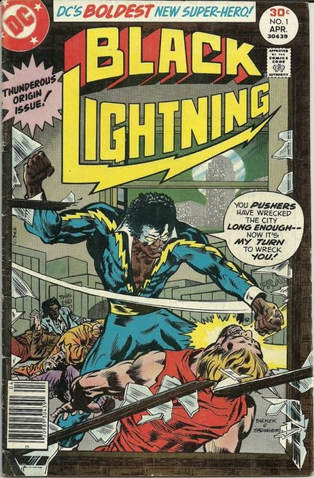
Developing this last point further, there does appear to be three distinct periods (or waves) of black superheroes. From 1973 to 1978 (the first wave) there are 7 black characters: Black Goliath, Black Lightning, the Black Panther, Brother Voodoo, the Falcon, Luke Cage, and Storm. These are the fore-fathers and mothers of those that come later. The second wave begins in 1983 and ends in 1987. During this time period we had several carryovers from the previous wave (Luke Cage teaming up with Iron Fist, the Black Panther and the Falcon eventually joining the Avengers at different times and Storm staying with the X-Men). Additionally, we had several newcomers: Cloak, Strike, Megaton, Jim Rhodes as Iron Man and John Stewart as Green Lantern.
The last wave of black characters is by far the largest. Starting in about 1991 there has been an explosion of new faces. We still have several carryovers, their fates varying significantly: Storm is still around with the X-Men, Jim Rhodes was given his own comic (War Machine), Luke Cage was resurrected and then canceled (ending the career of the longest running black character) along with, Captain Marvel and John Stewart as Green Lantern, and the Black Panther had a small miniseries. At the end of the day, however, when all is said and done, the most recent wave belongs to the new characters. During this time we are introduced to the largest number of black superheroes than previously at any other time. They "bum-rushed" the industry and changed the stereotype of black superheroes. Or did they?
The characters themselves are not always easy to identify. Aside from the fact that many of them wear costumes, which makes it difficult to see their race/identity:
- 13 appear briefly and then disappear as the comics themselves are discontinued (Brother Voodoo, Captain Marvel, Ebony Warrior, Horus, Numidian Force, Original Man, Purge, Sustah-Girl and Zwanna);
- 3 characters appeared with teammates for the better part of their careers (Cloak appeared with Dagger for his whole career, the Falcon appeared with Captain America for several issues and Luke Cage appeared with Iron Fist for more than half of his series);
- 3 took over characters initially created for and then left by Whites (John Stewart as the Green Lantern, Jim Rhodes as Iron Man and the new Captain Marvel),
- 12 appear only in the context of a large team where they are featured as members (Storm and later Bishop in the X-Men, Rosalyn, Murdock, Franklyn (Shift), Alexander Collins and Desmond Negril (Rasta) of Tribe and the various members of Numidian Force); and,
- 2 initially start out in superteams before going solo (Nighthrasher from the New Warriors and Captain Marvel from the Avengers).
In addition to these factors, the timing of the characters appearances have also been somewhat difficult to index. In the 24 year-period under examination, Luke Cage appeared in three different series (Luke Cage: Hero for Hire, Luke Cage, Powerman and Cage) spanning by far the longest time period (from 1972 to 1993); the Black Panther has appeared in three different series (Jungle Action and Marvel Premier, Black Panther, the Black Panther: Panther's Prey) and one relatively decent run with the Avengers; the Falcon has appeared in three major series: including his first with Captain America, one with the Avengers and one solo project; John Stewart as the Green Lantern has appeared in two major series (Green Lantern and Green Lantern, Mosaic); Jim Rhodes as Iron Man has appeared in two major series (Iron Man and later War Machine); Cloak appeared in three series (one under the heading Strange Tales, then Mutant Misadventures of and then finally Cloak and Dagger); Horus, son of Osiris, appeared in two series (one published by Acme and then ANIA); Original Man appeared in two series (one published by ANIA and one published by Omega7) and numerous heroes were initially brought out, were withdrawn and then were re-released (Black Panther, the Falcon, John Stewart as Green Lantern, Jim Rhodes as Iron Man, Luke Cage and Megaton). For the interested reader, therefore, black characters appear somewhat infrequently and the operative mode of "guess whose coming to comics this month" appears to be the dominant strategy (at least in the earlier period).
Developing this last point further, there does appear to be three distinct periods (or waves) of black superheroes. From 1973 to 1978 (the first wave) there are 7 black characters: Black Goliath, Black Lightning, the Black Panther, Brother Voodoo, the Falcon, Luke Cage, and Storm. These are the fore-fathers and mothers of those that come later. The second wave begins in 1983 and ends in 1987. During this time period we had several carryovers from the previous wave (Luke Cage teaming up with Iron Fist, the Black Panther and the Falcon eventually joining the Avengers at different times and Storm staying with the X-Men). Additionally, we had several newcomers: Cloak, Strike, Megaton, Jim Rhodes as Iron Man and John Stewart as Green Lantern.
The last wave of black characters is by far the largest. Starting in about 1991 there has been an explosion of new faces. We still have several carryovers, their fates varying significantly: Storm is still around with the X-Men, Jim Rhodes was given his own comic (War Machine), Luke Cage was resurrected and then canceled (ending the career of the longest running black character) along with, Captain Marvel and John Stewart as Green Lantern, and the Black Panther had a small miniseries. At the end of the day, however, when all is said and done, the most recent wave belongs to the new characters. During this time we are introduced to the largest number of black superheroes than previously at any other time. They "bum-rushed" the industry and changed the stereotype of black superheroes. Or did they?
 |  |
Demeanor and Physical Presence
Upon examining gender, rather quickly we observe that most of the characters are male. As expected, of all 42 characters, only 5 are women. These include: Captain Marvel, an unnamed sister from Numidian Force, Rosalyn (one of the members of Tribe), Storm and Sustah-girl. This presence is diminished even further given the fact that three of these women are members of superteams, and that Captain Marvel's as well as Sustah-Girl's comic lasted only one issue.
Moving to the issue of physical build, we find that most of the characters are generally depicted as being athletic in form.
With regards to superpowers, the situation is quite complex. Seven of the characters use some form of armor in their super-doings (Hardware, Iron Man, Nightwatch, Nighthrasher, Purge, Shadowhawk and Steel); 6 characters rely on strength (Black Goliath, Brotherman, Luke Cage, Rosalyn, Strike and Zwanna), 2 use agility (the Black Panther and Ebony Warrior), 2 use creation (John Stewart as Green Lantern and Alexander Collins of Tribe), 2 use lasers (Captain Marvel and Meteor Man), 1 uses the weather (Storm), 2 draw their power from other characters (Bishop and Flatbush Native), 1 uses an invisible shield which serves as a conduit for redirecting energy (Rocket), 1 can pull individuals into a dark abyss (Cloak), 1 uses magic (Brother Voodoo), 1 uses flight (the Falcon), 1 wields an ankh like Thor (Horus), 1 uses speed combined with strength (Franklyn from Tribe),1 uses invisibility (Murdock from Tribe) and 1 seems to be able to do just about anything he wants (Original Man).
It should be understood that I don't believe there is something wrong with a character having strength or athleticism (even though it caters to a particular stereotype). Rather, it is more of an issue of context. If the only powers that Blacks have in comics are those normally associated with Blacks, then the perspective is relatively narrow with regards to what black characters can do. As a consequence, the storyline will be constricted as well as well as the perception of Blacks in general. If, on the other hand, the powers of Blacks are diverse, then I believe the possibilities that Blacks can achieve are also enhanced. In this case, we would see a wider range of storylines as well as increased educational possibilities.
Moving to the issue of physical build, we find that most of the characters are generally depicted as being athletic in form.
With regards to superpowers, the situation is quite complex. Seven of the characters use some form of armor in their super-doings (Hardware, Iron Man, Nightwatch, Nighthrasher, Purge, Shadowhawk and Steel); 6 characters rely on strength (Black Goliath, Brotherman, Luke Cage, Rosalyn, Strike and Zwanna), 2 use agility (the Black Panther and Ebony Warrior), 2 use creation (John Stewart as Green Lantern and Alexander Collins of Tribe), 2 use lasers (Captain Marvel and Meteor Man), 1 uses the weather (Storm), 2 draw their power from other characters (Bishop and Flatbush Native), 1 uses an invisible shield which serves as a conduit for redirecting energy (Rocket), 1 can pull individuals into a dark abyss (Cloak), 1 uses magic (Brother Voodoo), 1 uses flight (the Falcon), 1 wields an ankh like Thor (Horus), 1 uses speed combined with strength (Franklyn from Tribe),1 uses invisibility (Murdock from Tribe) and 1 seems to be able to do just about anything he wants (Original Man).
It should be understood that I don't believe there is something wrong with a character having strength or athleticism (even though it caters to a particular stereotype). Rather, it is more of an issue of context. If the only powers that Blacks have in comics are those normally associated with Blacks, then the perspective is relatively narrow with regards to what black characters can do. As a consequence, the storyline will be constricted as well as well as the perception of Blacks in general. If, on the other hand, the powers of Blacks are diverse, then I believe the possibilities that Blacks can achieve are also enhanced. In this case, we would see a wider range of storylines as well as increased educational possibilities.
Geography and Employment
As found, 31 out of the 42 characters experienced their numerous adventures within urban, USA. Like a large number of Blacks (65% by some estimations), the characters, their lives, their stories, their problems and their solutions are all limited to one experience. This sustains the dominant stereotype and at the same time ignores a significant segment of the black population: those that live in the rural south as well as those that live abroad. Deviating from the norm, however, are eleven characters: the Black Panther, Brother Voodoo, Horus, John Stewart as Green Lantern, Nighthrasher, Numidian Force and Storm. How did these superheroes break the mold?
Although based in the United States, 2 characters were originally from Africa and thus often traveled home for various reasons (mythical Wakanda in the case of the Black Panther and Kenya in the case of Storm). Two characters were born abroad and stayed there (Horus was born in Africa and Brother Voodoo was born in Haiti). The Black Panther and Storm were also affiliated with superteams (the Black Panther with the Avengers and Storm with the X-Men) which traveled around the globe. Numidian Force also traveled a great deal except in their case around the universe. John Stewart as Green Lantern was also afforded the opportunity to travel a great deal, following in the path of the illustrious Green Lantern Corp. He may in fact be the most traveled black character. Last, but not least, is Nighthrasher. Facilitated by his immense wealth, this character was afforded numerous opportunities to travel around the globe. Invariably, therefore, we can conclude that the way out of urban America is to be born somewhere else, join an internationally oriented organization or make a lot of money. Who says comics do not reflect reality?
What about the job situation? Perhaps in no other area have Blacks done as well economically as they have in comic books. Every character has a job except for 11: Brother Voodoo, Cloak, Horus, Luke Cage, Flatbush Native, Megaton, Original Man, Static (a high school student), Shadowhawk, Strike and Zwanna (a college student). This situation did not begin with such a glorious record however.
Initially starting with some stereotypical positions (the Falcon was a social worker, Black Lighting was a high school teacher, Luke Cage and the Black Panther were private detectives), the job situation improves dramatically overtime. Eventually 4 characters will be teachers at various levels (Black Lightning and Sustah-girl in high school and Captain Marvel as well as Nightwatch at the college level), 3 will be lawyers (Brotherman, Icon and Shadowhawk), 1 runs a bookstore (Ebony Warrior) and 6 characters will have major corporate positions (Black Goliath, Hardware, Jim Rhodes as Iron Man, Nighthrasher, Purge and Steel). Not only will these individuals have corporate positions, but they each turn out to be the best in their respective fields.
Although based in the United States, 2 characters were originally from Africa and thus often traveled home for various reasons (mythical Wakanda in the case of the Black Panther and Kenya in the case of Storm). Two characters were born abroad and stayed there (Horus was born in Africa and Brother Voodoo was born in Haiti). The Black Panther and Storm were also affiliated with superteams (the Black Panther with the Avengers and Storm with the X-Men) which traveled around the globe. Numidian Force also traveled a great deal except in their case around the universe. John Stewart as Green Lantern was also afforded the opportunity to travel a great deal, following in the path of the illustrious Green Lantern Corp. He may in fact be the most traveled black character. Last, but not least, is Nighthrasher. Facilitated by his immense wealth, this character was afforded numerous opportunities to travel around the globe. Invariably, therefore, we can conclude that the way out of urban America is to be born somewhere else, join an internationally oriented organization or make a lot of money. Who says comics do not reflect reality?
What about the job situation? Perhaps in no other area have Blacks done as well economically as they have in comic books. Every character has a job except for 11: Brother Voodoo, Cloak, Horus, Luke Cage, Flatbush Native, Megaton, Original Man, Static (a high school student), Shadowhawk, Strike and Zwanna (a college student). This situation did not begin with such a glorious record however.
Initially starting with some stereotypical positions (the Falcon was a social worker, Black Lighting was a high school teacher, Luke Cage and the Black Panther were private detectives), the job situation improves dramatically overtime. Eventually 4 characters will be teachers at various levels (Black Lightning and Sustah-girl in high school and Captain Marvel as well as Nightwatch at the college level), 3 will be lawyers (Brotherman, Icon and Shadowhawk), 1 runs a bookstore (Ebony Warrior) and 6 characters will have major corporate positions (Black Goliath, Hardware, Jim Rhodes as Iron Man, Nighthrasher, Purge and Steel). Not only will these individuals have corporate positions, but they each turn out to be the best in their respective fields.
Relationships
In terms of threatening panels; i.e. those in which violence, danger, fear and aggression are displayed, there has been a distinct change overtime. The first few comics appearing from 1973-1978 (Black Goliath, Black Lightning, Black Panther, Brother Voodoo, Luke Cage and the Falcon) exhibited a strong tendency for threatening imagery. Averaging 68%, most panels in these comics were identified as threatening or aggressive. During this time period, consequently, the depiction of Blacks is consistent with existing stereotypes.
During the 1983-1987 period, the second wave, including the comics of the Falcon mini-series, Jim Rhodes as Iron Man, John Stewart as Green Lantern, Storm, Luke Cage, the content changed significantly. Averaging 50%, we find that half of the panels during this time period were identified as being threatening. Here, none of the levels of aggression are even close to the previous time period. Additionally, one can see the storylines developing more fully and the amount of time spent in combat decreasing. This allows more time for conversations and general character development.
The final time period is also quite revealing. Averaging 57%, the context of black superheroes has become more threatening than the previous time period but less than that identified in the earlier period. What is perhaps more important than this average in this last time period, however, is the greater amount of variance exhibited. When you look at the panels today you see the full spectrum represented. One can see the stereotypical image of the Blacks as savages perspective. This would include: Cage, Meteor Man, Nightwatch, Purge and selected issues of Flatbush Native, Original Man, Nighthrasher, Tribe or Zwanna. One can observe some very non-threatening representations where the less-aggressive black characters can be identified. This would include: Brotherman, Ebony Warrior, Horus, Icon, John Stewart as Green Lantern and Static. Additionally, one can also get a very balanced representation, where the threatening and non-threatening imagery is about even. This would include: Hardware, Steel, Shadowhawk and War Machine. Sophistication and diversity is thus found, supporting the point made in Ethnic Images in the Comics.
In the first time period acts of brute force average 7.23, acts of athleticism average 1.76 and acts of intelligence average 1.46. Black Lightning provides us with the most brutal comic during the time period (totaling 14 acts of brute force), but never to be too far outdone the second and third most brutal belong to Luke Cage (totaling 12 and 10 acts of brute force, respectively). On the low end of the spectrum we have the Black Panther, totaling 3. We thus find that in the beginning of black superheroes the image of the brutal savage was fully incorporated into the story.
By the time of the second wave we see a more balanced use of superpowers emerging. During this time period the average number for acts of brute force dropped slightly to 5.55, the average number for acts of athleticism increased to 1.88 and average number for acts of intelligence increased to 3.44. These averages veil some other significant factors however.
During the 1989-1994 time period we see significant variance across the board. We see extreme uses of brute force in Cage (of course), Jim Rhodes as War Machine, Tribe and Zwanna - all totaling above 9 acts a piece, as well as comic that are very non-violent: Brotherman, Green Lantern Mosaic, Hardware, Icon, Shadowhawk and Static. We see characters that use significant amounts of intelligence: i.e., Green Lantern Mosaic and Static (each totaling above 8 acts a piece in specific issues); those who use little intelligence: i.e., Brotherman, Cage, Hardware, Icon and Nighthrasher (totaling 1 act a piece for specific issues) and those who use no intelligence whatsoever: Shadowhawk and Tribe. As a consequence, we find that once again the stereotype is at once supported and refuted by the existing literature.
As found 48 out of the 65 problems confronted encompass the four categories identified above. Consequently, we find that black superheroes are usually relatively narrow in focus with regards to the problems that they address. Rarely will it be the case, therefore, like it is with Superman or the X-Men, where the citizens of the earth or the Universe will owe their safety to the "super-doings" of a black superhero. More likely it would be the case that some individual or maybe a neighborhood will owe their well being to the black character. In terms of the 17 exceptions to this trend, we see a certain amount of variance: 8 involve kidnapping/hostage crises (Luke Cage #16, Cage #14, Falcon #4, Black Lighting #6, Nighthrasher #5, Nightwatch #1, Static #1 and War Machine #1), 6 involve moral dilemmas (Luke Cage #16, Nightwatch #1, Shadowhawk #9, X-Men #198 and X-Men #220), 1 involves getting home from another planet (Black Goliath #5), 1 involves keeping a diverse group of beings together on a planet (Green Lantern Mosaic #1), 1 involves an international arms dealer (Steel #4),1 involves a revolution (War Machine #3) and 1 involves the political domination of a nation state (Horus #1).
In terms of the target of these threats the situation changes dramatically. In the beginning the superheroes themselves are generally the primary targets, along with their family/friends and/or their neighborhoods. This would include: Luke Cage #9, #16, #21, #34, Captain America and the Falcon #177, #191, Black Panther #22, #24, Black Goliath #5, Black Lightning #2. As time progresses, however, so do the targets. In the second time period, the targets move from a personal and neighborhood focus to address those on a citywide level. Here we have Powerman and Ironfist #53, #123, Falcon #4, Iron Man #171 and Green Lantern #183. For the first time we also see a black character involved in saving a planet. This involves John Stewart as Green Lantern in issues #197, #14 (part 1 of 4) and Green Lantern Mosaic #1.
By the time of the last wave the largest array of targets have finally emerged. Indeed, not only has the number become more diverse, but individual characters themselves will also vary their attention from issue to issue. This allows even more complexity. For example, in some comics the character will be protecting themselves or a friend (i.e., Shadowhawk #9, Icon #14, Static #1, Steel #1 and War Machine #1), only to turn around another issue and protect the city or the globe (i.e., Shadowhawk #1, Icon #1, Static #7, Steel #4 and War Machine #3). We have those who concern themselves with just one city (i.e., Brotherman, Ebony Warrior and Purge). We have the emergence of characters whose battle against evil is world-wide. This would include Hardware and Tribe. Finally, we also have superheroes who will be addressing a problem on one planet one issue and another planet another issue (Cloak and Dagger #3 and #14, Original Man #0 and #1). As a result, the current list of superheroes now confronts the greatest amount of problems in the most areas possible. The stereotype of the narrowly focused black is thus seriously damaged.
During the 1983-1987 period, the second wave, including the comics of the Falcon mini-series, Jim Rhodes as Iron Man, John Stewart as Green Lantern, Storm, Luke Cage, the content changed significantly. Averaging 50%, we find that half of the panels during this time period were identified as being threatening. Here, none of the levels of aggression are even close to the previous time period. Additionally, one can see the storylines developing more fully and the amount of time spent in combat decreasing. This allows more time for conversations and general character development.
The final time period is also quite revealing. Averaging 57%, the context of black superheroes has become more threatening than the previous time period but less than that identified in the earlier period. What is perhaps more important than this average in this last time period, however, is the greater amount of variance exhibited. When you look at the panels today you see the full spectrum represented. One can see the stereotypical image of the Blacks as savages perspective. This would include: Cage, Meteor Man, Nightwatch, Purge and selected issues of Flatbush Native, Original Man, Nighthrasher, Tribe or Zwanna. One can observe some very non-threatening representations where the less-aggressive black characters can be identified. This would include: Brotherman, Ebony Warrior, Horus, Icon, John Stewart as Green Lantern and Static. Additionally, one can also get a very balanced representation, where the threatening and non-threatening imagery is about even. This would include: Hardware, Steel, Shadowhawk and War Machine. Sophistication and diversity is thus found, supporting the point made in Ethnic Images in the Comics.
In the first time period acts of brute force average 7.23, acts of athleticism average 1.76 and acts of intelligence average 1.46. Black Lightning provides us with the most brutal comic during the time period (totaling 14 acts of brute force), but never to be too far outdone the second and third most brutal belong to Luke Cage (totaling 12 and 10 acts of brute force, respectively). On the low end of the spectrum we have the Black Panther, totaling 3. We thus find that in the beginning of black superheroes the image of the brutal savage was fully incorporated into the story.
By the time of the second wave we see a more balanced use of superpowers emerging. During this time period the average number for acts of brute force dropped slightly to 5.55, the average number for acts of athleticism increased to 1.88 and average number for acts of intelligence increased to 3.44. These averages veil some other significant factors however.
During the 1989-1994 time period we see significant variance across the board. We see extreme uses of brute force in Cage (of course), Jim Rhodes as War Machine, Tribe and Zwanna - all totaling above 9 acts a piece, as well as comic that are very non-violent: Brotherman, Green Lantern Mosaic, Hardware, Icon, Shadowhawk and Static. We see characters that use significant amounts of intelligence: i.e., Green Lantern Mosaic and Static (each totaling above 8 acts a piece in specific issues); those who use little intelligence: i.e., Brotherman, Cage, Hardware, Icon and Nighthrasher (totaling 1 act a piece for specific issues) and those who use no intelligence whatsoever: Shadowhawk and Tribe. As a consequence, we find that once again the stereotype is at once supported and refuted by the existing literature.
As found 48 out of the 65 problems confronted encompass the four categories identified above. Consequently, we find that black superheroes are usually relatively narrow in focus with regards to the problems that they address. Rarely will it be the case, therefore, like it is with Superman or the X-Men, where the citizens of the earth or the Universe will owe their safety to the "super-doings" of a black superhero. More likely it would be the case that some individual or maybe a neighborhood will owe their well being to the black character. In terms of the 17 exceptions to this trend, we see a certain amount of variance: 8 involve kidnapping/hostage crises (Luke Cage #16, Cage #14, Falcon #4, Black Lighting #6, Nighthrasher #5, Nightwatch #1, Static #1 and War Machine #1), 6 involve moral dilemmas (Luke Cage #16, Nightwatch #1, Shadowhawk #9, X-Men #198 and X-Men #220), 1 involves getting home from another planet (Black Goliath #5), 1 involves keeping a diverse group of beings together on a planet (Green Lantern Mosaic #1), 1 involves an international arms dealer (Steel #4),1 involves a revolution (War Machine #3) and 1 involves the political domination of a nation state (Horus #1).
In terms of the target of these threats the situation changes dramatically. In the beginning the superheroes themselves are generally the primary targets, along with their family/friends and/or their neighborhoods. This would include: Luke Cage #9, #16, #21, #34, Captain America and the Falcon #177, #191, Black Panther #22, #24, Black Goliath #5, Black Lightning #2. As time progresses, however, so do the targets. In the second time period, the targets move from a personal and neighborhood focus to address those on a citywide level. Here we have Powerman and Ironfist #53, #123, Falcon #4, Iron Man #171 and Green Lantern #183. For the first time we also see a black character involved in saving a planet. This involves John Stewart as Green Lantern in issues #197, #14 (part 1 of 4) and Green Lantern Mosaic #1.
By the time of the last wave the largest array of targets have finally emerged. Indeed, not only has the number become more diverse, but individual characters themselves will also vary their attention from issue to issue. This allows even more complexity. For example, in some comics the character will be protecting themselves or a friend (i.e., Shadowhawk #9, Icon #14, Static #1, Steel #1 and War Machine #1), only to turn around another issue and protect the city or the globe (i.e., Shadowhawk #1, Icon #1, Static #7, Steel #4 and War Machine #3). We have those who concern themselves with just one city (i.e., Brotherman, Ebony Warrior and Purge). We have the emergence of characters whose battle against evil is world-wide. This would include Hardware and Tribe. Finally, we also have superheroes who will be addressing a problem on one planet one issue and another planet another issue (Cloak and Dagger #3 and #14, Original Man #0 and #1). As a result, the current list of superheroes now confronts the greatest amount of problems in the most areas possible. The stereotype of the narrowly focused black is thus seriously damaged.
 RSS Feed