• Opening
  • Basics
  • Research
  • Writing
  • Teaching
  • Media
  • Scholarism
  • Audio/Video
  • Podcasts
  • Students?!
  • Archiving
  • Art
  • Analog (the anti-blog)
  • Other Blog Entries
  • Webpages
  • Glorious Failures
  • American Academy of Arts and Sciences Event
  • Art of Dom and Res Syllabi
  • domination and resistance recordings
  • Anti-Black Human Rights Violations
  • Repression 101
[Christian Davenport]

Rwanda, Research and the Wisdom of (Non)Responsiveness (or, Email is a Gift Not a Responsibility)

3/9/2014

0 Comments

 
Picture
As I prepare for the 20th anniversary of the Rwandan political violence of 1994 (i.e., the genocide, the interstate war, the civil war and the other forms of activity that are not easily named), I am reminded of earlier correspondence and how the modern period conceives of communication as well as what researchers must/need not respond to. EJ: Cue Rocky theme. You don't need the link.  It's in your head already.

For example, out of the blue on June 2012, I received the following email:

Dear Professor Davenport,

In 2009 you co-authored an article with Professor Allan Stam, published in the Miller-McCune magazine. The article, “What Really Happened in Rwanda,” addressed the controversy that has surrounded your research on Rwanda since you presented your findings at a genocide conference in Kigali in 2003. In the Miller-McCune article you explain that, although your research was well intentioned and you never denied that a genocide took place, you and Mr. Stam have been labelled as genocide deniers.  

On your GenoDynamics website, you present some ‘highlights’ of the debate over your research. These include a 2004 press release containing some of your conclusions, as well as a Reuters article that you claim was inaccurate and responsible for the resulting controversy. In addition, you have posted what you say are more careful and accurate media reports on your research. You also offer some ‘reflections of others about the hornet’s nest that [you] stepped into.’

I was, however, quite shocked to find that you present Keith Harmon Snow’s article “Hotel Rwanda: Hollywood and the Holocaust in Central Africa” and Edward Herman’s article “Genocide Inflation is the Real Human Rights Threat” as ‘reflections.’ The work of Keith Harmon Snow and Edward Herman on Rwanda involves a brazen denial of the 1994 genocide against the Tutsi, and the articles that you refer to are emblematic of the denialist discourse these authors have propounded in various publications.

Harmon Snow, for example, has presented his virulent reading of what ‘really happened’ in Rwanda in numerous articles, such as “The US Sponsored ‘Rwandan Genocide’ and its Aftermath,” and “The Rwanda Hitlist: Revisionism, Denial and the Genocide Conspiracy.” According to Harmon Snow, the pre-planned genocide against the Tutsi is a myth; he further argues that “if anyone planned genocide in Rwanda, it was the RPF, and only the RPF.” Edward Herman’s book The Politics of Genocide, which was co-authored with David Peterson, presents a similar account of what happened. It essentially turns the victims of the genocide into perpetrators, making them responsible for their own annihilation. Herman and Peterson openly argue that there was no organized genocide of Tutsi. Instead they state that “the RPF was the only well-organized killing force within Rwanda in 1994.”

These accounts reject the overwhelming weight of scholarship on Rwanda, which concludes that Hutu extremists organized and perpetrated a genocide against the Tutsi population, including Hutu that were opposed to the “Hutu Power” regime. Not surprisingly, Keith Harmon Snow and Edward Herman have denounced such scholarship as mere propaganda that misrepresents what really happened in Rwanda, claiming it is one of the most widely misunderstood events in contemporary history.

In the wake of the genocide against Tutsi in Rwanda, those involved in organizing and implementing the genocide developed a sophisticated ideological discourse aimed at denying their genocidal actions. While not able to deny the occurrence of an episode of mass violence, their discourse aimed at effectively denying the genocide by reinterpreting the event and its essential reality. The narrative account of Keith Harmon Snow and Edward Herman on Rwanda is deeply dangerous, because it recycles much of this denialist discourse.

The fact that you present the accounts of Keith Harmon Snow and Edward Herman as ‘reflections’ raises significant questions about how to interpret your own research and findings. Although you point out that your research does not seek to deny the genocide against the Tutsi, the articles you cite as ‘reflections’ do involve a blatant denial of that genocide.

Given that Harmon Snow and Herman have cited your work in their own publications, I must ask: do you agree with the accounts they present? Or, do you consider that their analyses misrepresents your research and its findings? If so, why do you lend these figures credibility by posting their ‘reflections’, and why do you not decisively distance yourself from their denialist conclusions?

I would be grateful for any comments you could supply to me – on the record, as I am researching these issues for future publications.

Yours sincerely,
 
Some random law student I never met (not his real name)


Interesting read, huh?  Remind you of your recent emails?  Well, three things I immediately found interesting. 

First, Mr. random law student did not quite catch my use of the word "reflections".  On the webpage, we had 7 categories (the 5th is what he is referencing):

  1) What we said/what we wrote (“Rwandan Genocide, 10th Anniversary: Correcting 
        the Record ”)
    2) The poorly researched and inaccurate Reuters Article that started all the controversy 
         (“Rwanda Killings weren’t Genocide”)
    3) The more careful efforts that came closer to what we actually said (“Correcting the 
         Record”)
    4) The most careful examination of the topic offered in the print media (Genocide +  
         Politicide)
    5) Reflections of others about the Hornet’s nest that we stepped into:
    6) Emails received by GenoDynamics (Samples)
    7) A Continuation of the Controversy undertaken by others

By the use of the word "reflection", I was not suggesting anything about the work itself.  Indeed, I was simply collecting everything that referenced our research, putting it into categories regarding how the work was used.  Some simply quoted what we said, some discussed the controversies raised by our work, some "reflected" on the findings and thought about what they might have meant, none attempted to actually provide any systematic evaluations of their own of the data compiled and offered on our webpage.  

Second, this piece was like many others.  They acknowledge that we did not deny the genocide, the author nevertheless wishes to push us to distance ourselves from those that do - although of course we never actually support or acknowledge the work.  We just reference who mentioned it.

Third, I found the email a bit…. well…. rude.  I was kind of used to that after the controversy sparked by disclosures of research at the 10th anniversary as well as growing up in New York city. Nevertheless, I thought that I did not want to respond to the individual for they seemed a lot less interested in discussing facts than attacking.  Why try to engage in a civil conversation with such a person?

Nevertheless, I responded on June 11th of that same year:

Mr. Random Student (not my actual greeting),

I am in the process (with Prof. Stam) of clarifying our position relative to the others you have mentioned in your email.  In brief, the webpage that you reference (which is currently being revised) listed articles largely in simplistic categories: those that outright attacked us without considering anything that was compiled/analyzed and those that appeared to "reflect" on what we said at least to some extent.  As much of this discussion has not been scholarly (i.e., based on the rigorous compilation and evaluation of evidence) we have tended to avoid most of it and proceeded to finish the book which should be done next year.  As we complete the manuscript, then we will turn to addressing the issues you raise.

Sincerely

Christian Davenport


To this, Mr. random student responded on June 22nd:

Dear Professor Davenport,
 
My reply comes somewhat belatedly, but the nature of your response has set me thinking. Although I am grateful for your quick reaction to my letter, I have to admit that I am deeply disappointed by the cursory nature of your reply, which does not in any way answer the questions that I have posed.

In your reaction to my letter, you explain that you are in the process (with Prof. Stam) of writing a book that clarifies your position relative to the others I have mentioned in my letter. You furthermore make clear that you will address my questions sometime next year once the manuscript has been finished. I however cannot understand why you do not directly answer the questions that I have posed. The questions address a serious issue, which is related to your research and therefore call for an immediate answer.

It may well be the case that your website is ‘under revision’, but in one of your ‘simplistic categories’ you do mention the work of Keith Harmon Snow and Edward S. Herman as ‘reflections.’ Their work on Rwanda entails some of the most brazen denial of the genocide against the Tutsi I have ever seen. As a scholar, in what way could you possibly ‘clarify your position’ relative to them other than by denouncing their genocide denial and by distancing yourself from their denialist endeavour?

In your reaction, you state that “as much of this discussion has not been scholarly (i.e., based on the rigorous compilation and evaluation of evidence) we have tended to avoid most of it.” I think that instead of ignoring such ‘discussion’ on what happened in Rwanda, you should have acted, because these authors do draw on your work to present a very questionable alternative version of history. Genocide denial is an intrinsic part of the genocidal process and genocide scholars have the responsibility to critically address such denial, especially if it makes use of one’s scholarly work. 

I therefore ask you again: do you agree with the accounts that Keith Harmon Snow and Edward S. Herman present? Or do you consider that their analyses misrepresent your research and its findings? If so, why do you lend them credibility by posting their ‘reflections’, and why do you not decisively distance yourself from their denialist conclusions?

I kindly urge you to answer the abovementioned questions – on the record, as I am researching these issues for future publications. Note that I too have a pressing deadline for publication and I cannot wait another year for an answer to these questions. I do, however, hope that it is not my deadline but the seriousness of the issue at hand which calls for a clear response that motivates you to answer the questions posed.

Yours sincerely,

random law student


As I was traveling at the time and without access to an internet connection, I did not see this original email until some time later. Indeed, I did not see it until returning after the summer (in late August) when I received the following:

Dear Professor Davenport,
 
A few weeks ago, on the 22nd of June to be precise, I replied to your email (see letter posted below). However, to date, I have not received an answer from you and I therefore want to confirm with you whether you received my email/letter in good order.
 
Yours sincerely,
 
random law student


Now, this series of emails raised a few issues for me:  

1) I was busily trying to work through a book manuscript, some articles, teaching and advising and did not really have the time to stop, carefully read the email as well as the work that it was referencing and respond.  

2) The initial email was sent during the summer (when I was not "working") and thus I was not as diligent as I normally would be going through my email. At that time, I was receiving somewhere between 50-100 emails a day and frankly I was not able to get through them all.  This is when I started to include the following under my email signature:

Email Rules of Engagement

- I receive between 75-100 emails per day and thus I might miss an individual email; if you have not heard from me in 3-5 days, resend (no offense taken or intended);
- I prefer direct human engagement and thus my emails are probably shorter than you expect or perhaps desire; and,
- Please use the Subject line to assist me in understanding how I can assist you (recall the 75-100 msgs)


3) I had not read Herman and Peterson or Snow's research and did not want to respond to something I had not read.  At that time, I only saw the short references that they made to the work in news articles and on the internet.  I still have not finished this book but plan on doing so by the end of March. The idea that I would stop what I was doing and read a non-university press book that I had not previously heard of before I finished my academic case load to help this person emailing me to do their research for them was a bit odd, I thought. In fact, if I were to assist them, I would be doing them a favor and why would I do someone a favor who approached me in this manner? I usually go by my mother's conception of etiquette (discussed another time) and this person was way off the mark.  But, what would Budha do?  Charles Tilly?  KRS-One?  You?  

4) I found the person emailing me a bit aggressive and reflected (yeah I am using the word again) on how the exchange would have gone if they were in my face.  Needless to say, I don't believe that they would be quite as forthright.  E-exchanges are very different from real ones. This was also just a bad email.  According to the article "Writing Effective Emails", one should use the subject line informatively, ask clearly for one thing and be clear on what response you would like. The subject line was "Questions Concerning Research on Rwanda", which is informative but does not conform to the more reasonable one topic at a time principle as I would have to read material that I had not previously read as well as write something that I had not intended to write.  Now, I acknowledge that the authors of the effective email piece also note that one should "go through your inbox regularly and respond as appropriate" but this is just not realistic.  We just receive far too much email now and with the constant stream something is always likely to be missed.  But I need not go on.  I have already addressed my opinions about email elsewhere.

5) I thought about if I had a responsibility to respond and I thought that no, I did not - either to the person emailing me or Herman and Peterson's work for that matter.  In the first case, the individual was somewhat rude and I thought that if someone emailing you had violated some general sense of respect and decency, then they were no longer someone that you needed to communicate with.  It was like, just because I send you an email, you need to respond to me.  And I was like: actually, no I don't.  In the second case, I felt that as a researcher, I had a responsibility to produce the best possible scholarship that I could and then release it to the world so that they can check my work, use it or not check it or use it.  I put it into the marketplace of ideas and the market decides what to do with it.  I am no longer responsible for how it is used any more than the makers of hammers are responsible for what people build with their tools.  Indeed, after it is sold in the store, the hammer no longer belongs to the manufacturer. The individual who "owns it" is responsible.  Now, I am not punting here. If the hammer is defective, then the manufacturer is responsible. But, if my hammer/dataset is sound, then that is where my role is done.  

I may still respond to Herman and Peterson as well as the scholars that have attacked their work referencing mine in passing (e.g., Adam Jones). From what I have read thus far, Herman and Peterson are not empirically-oriented and thus did not complete understand what we did in creating the data that was discussed. In their defense, however, they were not interested in understanding data collection, conflict/casualty estimation, causal inference or social science. They seemed interested in trying to validate particular, politically-charged causal relationships - something that we did not do because the data did not allow it. What we did was use all information available to create a reasonable estimation of casualties as well as battle fronts and draw a reasonable conclusion regarding the relationship between the two: i.e., that increases in the violence corresponded to movements forward of the Rwandan Patriotic Front's troops.  We did not speculate on why this correlation existed or the broader point of what it meant.  Herman and Peterson did speculate on the meaning - as they are free to do in a democracy and generally free society. Others (like Adam Jones) speculate on the meaning as well - as they are also free to do.  Unfortunately, these others are also non-empirically oriented scholars that do not properly understand the intricacies of data collection, conflict/casualty estimation, causal inference or diverse aspects of social science. Again, in their/his defense, they were not interested in doing this.  

Accordingly, as neither party seemed to be interested in the business of collecting evidence, rigorously assessing theoretically derived hypotheses in as transparent a fashion as possible and drawing reasonable conclusions, which was my objective, I felt no responsibility to respond to them (until now I suppose). Similar to the random student, I felt no necessity to communicate for we were not engaged in the same enterprise or sometimes on the same planet.  Sticks and stones (Jones) should have the same impact as flowers and candy (Herman and Peterson).

Now, this said, I do feel a responsibility to communicate with and have a genuine interest in communicating with those that wish to collect evidence in a rigorous, valid and reliable manner, test this evidence with an appropriate technique, discuss the findings of said evaluations and then think about the implications of these results. Individuals that are interested in these topics, will always find a timely, thorough and civil response when they contact me.  EJ: Cue some Sade...

With about a month to go, it will be interesting to see what the future brings in terms of discussion regarding Rwanda, research and responsiveness in communication.   But, as I am not actually sending this email myself but through some proxy who is doing this through my account as I attend to some related research matters in preparation for April, I think that I have learned a little something from the past and look forward to what is about to happen as the 20th anniversary of Rwanda 1994 approaches.  EJ: Cue up the appropriate Jay-Z…  
0 Comments

12 ways to navigate coverage for the  20th anniversary of Rwanda 1994 

3/2/2014

0 Comments

 
Picture
It is coming: the 20th anniversary of the Rwandan violence of 1994 (i.e., the interstate war, the civil war, the genocide, the sexual violence and some random wilding or, the genocide and civil war - depending upon who you are listening to).  Yes, it has been 20 years
and yes it is going to be quite something.  Much has happened over the last 20 years and much has happened over the last 10 as it relates to what we have come to understand about what happened. Some of it is consistent but much of it is not. We will get to more of that as the event approaches.  Look for the relaunch of www.genodynamics.com - your one-stop research site for the rigorous study of Rwandan political violence of 1994.

For now, I wanted to set forth some things that you should consider whenever anyone (including me) starts to talk about the topic. View them as the 12 things to help you understand Rwandan Political Violence as you read/see anything over the next few weeks on the internet, in newspapers, on tv, in magazines, on blogs as well as tweets:

1) What type of violence is being discussed: e.g., interstate war, civil war, genocide, sexual violence, random violence?  These have different definitions (e.g., see Meredith Sarkees and Frank Wayman and the late David Singer, Doug Lemke and David Cunningham, the late Charles Tilly or this cool special issue relevant to the topic), different causes and different implications.

2) When did the violence of interest start and how far back should one look for an origin - what date specifically?  One could start looking in April 1994, 1990, 1959, the early 1900s or during the formation of Rwanda-Burundi (they were lumped together in the beginning).

3) Who was involved in the conflict and who participated in the different forms of violence?  People tend to just combine actors together glossing over important differences: All Hutus, all Tutsis, Northern Hutus, Central Hutus, Tutsi that were in Rwanda prior to 1994, Tutsi that were outside of Rwanda after 1960.

4) Where were these people in the beginning of april and why?  In Kigali, in Washington DC, in Paris, in Detroit, in Uganda, in Butare, in Kibuye, etc.

5) Who benefitted the most from conflict and violence?  Strange to think about it but people do not engage in violence unless they get something out of it.  What did people get though: e.g., money, safety, territory/property, friendship, psychological satisfaction, banana beer or a combination of factors?  Did motives/benefits shift over time?

6) Who acted from positions of "strength" (i.e., they had choices, were conscious of what they were deciding, had resources and tactical advantage via weaponry/training) and positions of "weakness"?  Some actors might have been coaxed/conned/intimidated into acting.  Some might have known precisely what they were up to.

7) What evidence is one using to answer the questions above and where does it come from?  Researchers could use surveys, a census, newspapers, human rights records, government reports, satellite, forensic records, interviews and focus groups. Remember, stating is not the same as proving, all methods have advantages/ disadvantages. A good piece will tell you what they did, how they did it, what is good about what was done and what is deficient.  This is important because almost all people know as well as any avid viewer of the tv show Law and Order: Special Victims will attest: eyewitness testimony is highly problematic. This is the principle source of information regarding most events in Rwanda.  There must be discussion about what efforts were taken to assure that this human testimony was validated in some way.

8) Is there an alternative account of relevant events and was this considered in any way shape or form?  We must all be careful about being led down a particular pathway as a function of what source we choose to believe.  Ian Lustick warns us about this problem in his: "History, Historiography, and Political Science: Multiple Historical Records and the Problem of Selection Bias".  

9) What is the perspective, position and potential bias of the author/speaker (connection to perpetrators, victims, rebels, governments).  I talk about this in my book "Media Bias, Perspective and State Repression" but Akira Kurosowa does a much better illustration in his brilliant film Rashomon.

10) What was done (specifically) and against whom?  Now, you figure that this would be the first thing I would mention but part of the difficulty in prior research and discussion is that we did not seriously address the issues mentioned above. One cannot address this question until they have addressed the ones above and you should not trust anyone who does not address them.

11) How did violence progress and move throughout the country?  This helps us better understand who did what to whom and why but it also helps us understand where help is/was needed as well as who got services.
 
12) Does the relevant piece mention what has transpired in and around rwanda since 1994 in terms of prosecutions for crimes, other violent behavior (e.g., invasions, purges, assassinations, questionable deaths), political development, democratization/ autocratization, asylum and migration? If they do, please remember to ask the first 9 questions of this work as well.

More on Rwanda coming coon.  

0 Comments

H-U-S-T-L-E-R! - Tales from Rwanda, Part 26

2/27/2014

0 Comments

 
Picture
Note: Between 1999-2004 I traveled around Rwanda during research. Many things happened on my trips and it is only now that I start to share them.


Karinne (as usual not her real name) appeared to be into everything.  She was in three educational programs in five different countries.  She was co-Director of two centers.  She was writing several articles for journals and generals alike on women, democracy, civil society, new media, public spheres, genocide, women and genocide, democracy and women, civil society and genocide, truth and reconciliation, reconciliation and genocide – you get the point.  Unfortunately for Karinne, she did all this poorly.  Stretched too thin, all efforts seemed to be half-hearted. 

Now, this is not to say that Karinne was incapable of learning or alternatively teaching.  Rather, she had no interest in learning how to do anything correctly because that would just slow her down and cut into her profit margin.  All Karinne had to do was a little of everything regardless of quality because in Rwanda at the time there was a lot of nothing - not nothing nothing for there were a great number of initiatives underway; just nothing completed or completely working.  In addition to this, there was a lot of people, sympathy as well as money coming to the country in order to help get something, anything started.  And it came from all corners of the globe, it came – almost daily via envelopes, packages, Western Union, UPS, Fedex, Horses and Buggies. 

The desire to send was clear.  Individuals felt guilty about not doing anything. Collectively we had failed to do anything about the violence. We could not sit back and not do anything about the aftermath. Individuals also wanted to be part of the redevelopment.  But where should their support go - I mean where exactly do you send the check?  Rwanda was still a mystery to most of the world.  They knew killing fields but nothing about survivors and their institutions.  As a result, two areas became focal points of attention: governments and universities.  The reason was simple: both had webpages and could easily be found.  In a vacuum of misunderstanding, guilt and ignorance, those with these resources COULD clean up.  Karinne was one of them.  

Hers was a no limited enterprise.  Indeed, her reach was global.  She pimped all masterfully and in the most fabulously adorned outfits imaginable – day in and day out.  “Need an interpreter for your survey?”  “No problem,” in Yellow.  “Need some researchers to do some archival work?”  “No problem,” in Green.  “Need a little essay on women?”  “No Problem,” in Purple and Red.  “Need a little lecture to be given in Norway or Belgium or Toronto?”  “No Problem,” in Pink.  It just kept coming. I have seen some deep closets in my day.  My childhood friend Kadeem Hardison's mom ran a modeling agency so you got to see all types of clothes - on models, in designer's studios, in draft form, on the floor - everywhere.

Now, this all stood out prominently for slowly emerging from the ravages of civil war, genocide, regime change and chronic underdevelopment, Rwandans were generally broke.  Actually "dead broke" would be the more appropriate but less sensitive phrase.  The average Rwandan was partially clothed, shoeless and struggling to survive.  If they did not have clothes, they were either obtained from the local market which carried a limited assortment of designs, materials and colors or from a group swap-meet which offered a slightly greater variety.  In context, the clothing and general attitude made sense and it was also quite reasonable that folks kinda did what they had to do in order to do what they had to do.  Much respect.

Karinne was one of the better-off returnees however – representing a completely different Rwandan entirely.  She had some education, some life experience outside the country, some travel, some languages (more than the two or three that indigenous Rwandans had).  She also came with a West African sensibility: loud, colorful, boisterous, energetic and busy.  In contrast, indigenous Rwandans were generally mellow, subdued, noble, quiet – traumatized a little or just shy (not many have come this far into the continent).  It was almost my sixth trip to Rwanda before I heard a loud noise (that is the source of another story).  

Now the disjuncture between Rwandans did not go unnoticed. Because of the obvious gaming (playing all against all) and general inefficiency of Karinne, she developed quite an international reputation.  In airports in Amsterdam, cafes in Belgium and conferences in Maryland, stories abound about the colorful woman running the center and a private fiefdom at the University.  To the new and the men, she was inept but charming.  To the women, she was aggressive, dismissive but with flawless skin.  I heard of grant projects that were simultaneously being submitted to and funded by different organizations.  The same work with different funds.  We all just shook it off, acknowledging our naiveté, the price of doing business and figuring that sooner or later she would get hers.  She did this, consistently however – that is get hers.  There were no come-uppins though just go-downins to the endless pit that was her perfectly matching purse.  

In post-genocide Rwanda, there was always another NGO, another aid agency, another academic ready to pay for some information, another journalist wanting to do an expose on the striving Rwandan, another student, another intrepid soul seeking forgiveness for having stood by when the horror struck this little country. Karinne was able to suck all of them up like some empathetic vortex.  Out of the other end, we came out simultaneously warmed that we had attempted something, pissed that we did not achieve what we wanted, confused at where all the money went, relaxed that more time, resources as well as energy was not spent and frustrated that we were not able to complain to any one – accept those at the bar in Kenya who recently escaped Karinne’s grasp. 


All this for me was very familiar.  Karinne reminded me of every kid back on the block in New York city in the 1980s.  Afrika Bambatta said it best: 

  • Looking for the perfect beat (Searching for the perfect beat)
  • Looking for the perfect beat (Seeking for the perfect beat)
  • I must get mine (I'm out to get it)
  • I must get mine (I'm out to get it)

Or, you could go the New Jack City route.  Same vibe.  Different medium.

It was all home to me though.  As one looked out into the city - a fierce creature that waited either to reveal some wondrous vision and/or to rob you blind, one got very adept at looking for the vulnerable, the confused, the lost.  This made "transactions" a little easier.  I recalled one of my cousins rolling up on me at one point in the Bowery where I was not used to hanging out (I went for a pair of jeans around Canal Street but ventured to far in).  He stepped in front of me while two of his "associates" pulled up on the side and back of me. Given my height, I was completely hidden.  He looked me up and down and asked me for my watch.  I thought that I would get my ass handed to me by my father if I gave it up, as it had just been given to me and although scared to death, I would rather take the ass whipping from them. While they searched for their next move, I looked up and thought that the person looked familiar.  I then said his name and the two associates immediately walked away.  I was like, it's me, your cousin - your mom's sister's son.  

After that, it was as if the weather changed.  His face turned into a bright smile of acknowledgment and then he told me to watch out because there were folks who would take advantage.  He then pulled me over to the side of the street just in time to observe his associates helping a lost soul return their wallet to the "rightful owner".  For the next few hours, he schooled me on why he chose me and how I was walking through the street.

Karinne must have had the same sensibility of my cousin.  She smelled us coming off the plane, walking into the cafe and popping up at the University.  Fresh meat.  Mark.  You had to admire her though.  Game respects game as it were and she had plenty.  Of course after a long day of coding something or having an interview with someone that massacred their family, I wondered who would have come out victorious if Karinne were to meet my cousin, kind of like some non-celebrity death match show.  An international Hustlers ball.  I think she would take him.  H-U-S-T-L-E-R…..


0 Comments

Machetes to the Left, Machetes to the Right - Tales from Rwanda, Part 23

1/19/2014

0 Comments

 
Picture
Note: Between 1999-2004 I traveled around Rwanda during research. Many things happened on my trips and it is only now that I start to share them.
 
Perhaps the most disturbing aspect of traveling around Rwanda is the ghost of the genocide.  One might not know the particulars of what took place in a particular place back in 1990-1994 but one quickly gets a sense.  Before going to the country, I read all the books, articles and memoirs I could find.  I also saw a tremendous number of pictures of dead bodies – partially buried or floating.  I even saw the brief video made by Belgians traveling with the Rwandan Patriotic Front or RPF (the Tutsi rebel organization invading from Uganda) which showed the chaotic, sporadic and highly communicative behavior of those involved in the violence.Individuals came out of the jungle, would say something to one another (likely chiding each other on), a person would hack on a body for a while, walk off, have another screaming match and someone else would hack.  They would then walk away and you could see that the body was still alive.  What the hell were they saying?  Why didn’t they just kill the person?  Why did they do it at all?  What kind of sick f@%er hacks someone?  Who films it, and why didn’t the RPF have some snipers?  How can you hack someone? [Note:  Like so many artifacts, this video now appears to be lost.  If you know where it is posted, please let me know.]  

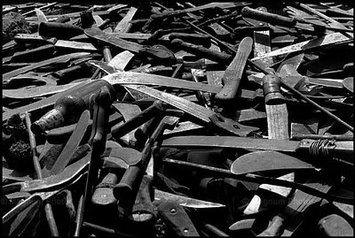
While the genocidal and non-genocidal violence is yet to be explained, part of the explanation needs to be that Rwandans practiced all the time: machetes were everywhere.  They were used to hack fruit from trees, to hack limbs for firewood, to hack meat (no butcher, just a blood-red wooden stub); they were used on the side of the road, on the side of a building, in markets, at restaurants, in bars (for lemons – for real), in hospitals, in schools.  In fact, I cannot think of one place where I went and did not see a machete. 

This reality made one feel surrounded by 8 million potential axe murderers.  Sorry to say it but that's the deal.  Now, I knew that I did not know who specifically had hacked anyone: even if someone was in jail, had confessed to the crime and sat there in a pink prison outfit (given to those involved in the genocide to embarrass and emasculate), you never quite knew which end was up. People were just arrested because their neighbor wanted their property, because they owed someone money, because someone wanted their spouse or because they had challenged the government.  You never knew.

Why confess?  You seen Law and Order.  Well add machetes.  I’m surprised they didn’t have more confessions just to escape the random machete carrier.  I suppose there were plenty of shivs in the prison but still.

As a result of this situation, it just seemed easier to me to assume that everyone was guilty – to err on the side of safety.  Now, this is no way to interact with folks, thinking everyone is a murderer.  In some strange way, however, growing up in New York was good preparation for Rwanda.  In the city (well, the one I knew in the 1970s and 1980s, not the new Disney thing on 42nd Street), you thought everyone was trying to "jack you up" – I wasn’t even in a bad neighborhood and this was the opinion.

Still, it is different navigating Rwanda because every time you hear a distant chop or thump, you shudder and wonder.  Every hand you shake, you reflect on how hard the callouses are, how strong the grip is.  Chop.  Then, you wonder if they could have done it.  Every pair of eyes you look into, you wonder what they see; what they saw.  Chop.  Every chicken or goat you see beheaded, you reflect.  Chop.  Every child you saw, old woman, young man, old man, young woman, you wonder.  Chop.  How can you have peace when the mechanism of piece creation is around you constantly?  People do not seem to check their machetes when they go places, like a hat.  They carry them like Handbags, or is it Teabags?  Casually, matter-a-factly, constantly, urgently. 

In this context, your eyes move constantly.  Checking out the most proximate hackers, machine guns, bands of children.  You do this at the same time you try not to move your head and body, which would communicate far too much uneasiness, marking one for the taking.

The result: you get physically and psychologically exhausted after being in Rwanda for a while and resolve yourself to your fate and/or faith.  Yet another thunderous hack is heard in the distance. 

0 Comments

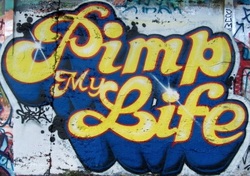
Pimp Their Lives - Tales from Rwanda, Part 21

11/15/2013

0 Comments

 
Picture
Note: Between 1999-2004 I traveled around Rwanda during research. Many things happened on my trips and it is only now that I start to share them. 

I had seen bars on windows, houses with gates as well as armed guards, even a dog or two at an opening of a fence, but Rwanda was quite different.  For those that had and wanted to keep their stuff, there were armed guards with machine guns and bats with nails in them and the walls were eight to ten feet high, topped with pieces of broken glass as well as barbed wire.  Now, these were not ordinary pieces of glass; they were immense shards, jagged and multicolored of about two by three inches a piece.  They stretched upward from the wall like a thousand little knives, sharpened to pointed perfection. 

The combination of all the factors struck me as bizarre but especially the last.  Would not the barbed wire do so much damage that the glass really served no purpose, I thought?  Well, yes, probably but this was not the point.  Barbed wire was not part of the average Rwandan’s life whereas most would be familiar with what broken glass could do. 

On entering a wealthy Rwandan home, one would see immense lawns, the shadow cast over the remaining wall – moonlight bouncing off the shards in between the beams of light like a prism of (in)security.  The house was huge but sectioned off – more defensible spaces I suppose.  We were led to the living room, greeted by the Ms. (not the Misses – different house, different story) who was adorned in a stunning shock of color and excess.  While we could not see the rest of the house and were offered no tour, one could see eight doors on different sides of the room.  We were in the center of the maze, very fitting I thought.

The house was elegant, tastefully sparse, decorated with a few masks, fabrics, paintings and pottery from different parts of Africa.  Before sitting down, Mason, myself and Francis (another colleague from Maryland on the project) to see the different pieces of art a little closer.  At some point, the Ms. excused herself (she needed to check something in the kitchen), leaving through one of the doors.  We looked at the handmade crafts (the chairs, table and bowls) and then looked at each other.  By any standard, this place was amazing.  The Ms. blew in and out about five times in one door and out another.  By the time we turned around the table was filled with food of all kinds – the ripest of fruit, the tenderest of meat, the sweetest of smells, some potato-like dish and something else that I had never seen.  Very quickly, we knew that we were in for one hell of a meal.  The four of us started eating out of the handmade bowls, later being joined by others – emerging from the different doors.  Every now and then I glanced though the window and out to the wall, seeing someone with a machine gun walk past. 

The next day we walked through some street in Kigali (the capital and home to the hotel in the movie Hotel Rwanda), closely navigating near the restaurant fronts whose guards kept the hundreds of beggars and money-changers at bay. One could see several hundred more in the cracks of the city (between buildings, in alley ways, on the hills).  The street was a buzz with activity, as always.  There were a million and one colors, smells, accents, faces and outfits.  Some wore three-piece suits, some wore only an old piece of African cloth.  Interestingly none wore shorts, despite the ridiculous heat.  This was considered rude and left for Mizungus.  Given the heat, being viewed as an outsider essentially sucked on every dimension but this one.

As we walked, three cars blew down the street, moving faster than anything else.  One of them seemed to miss everyone by inches and then as quickly as it turned onto the street, it turned and moved toward the bank.  Never slowing down, the car came to a screeching halt.  Guards came up on either side and someone in a fabulous two-piece suit stepped out.  If I had to guess, I would say Armani - all black, well-tailored.  More guards showed up and now with about six people on either side the man walked toward the building.  After he was inside, more guards came out, opened the door to the car and then three more individuals came out – one looking more important than the next.  Greetings were made and then they all entered the building.

We asked our guide: who was that?  To this, he only responded: “there are many in Rwanda with a great deal of money. That was obviously one of them.”  We looked at each other and smiled.

Sitting down for lunch across the street from the bank, behind an open fence, three guards, two machine guns and a big stick, I tried to pinpoint my feelings.  I had felt all this before but could not find the moment.  Then I remembered.  On one street in New York city, a homeless woman walked up to a bank deposit drawer, opened it, pulled down her pants, leaned back and furrowed her brow as she took a dump.  At the same time, some guy with an equally beautiful suit and amazing briefcase under his arm walked out of the bank and into a limousine.  The two most likely did not see one another but through me they occupied the same space and that cohesion as well as tension was tremendously unsettling.  How could the two exist in the same space?  What was I supposed to do with that information?  How was I supposed to ignore it?  Why was I allowed/guided to see it?  How could such stark differences exist?  Did they?  How could the car pass through the crowd like a ghost?  Which one was dreaming – the one or the other?  Did it run through the crowd or over it and I just was not able to see the poorer victimized?  What would happen if the bars were not there or the guards or the glass?  Would there be some Hobbesian “free for all”?  Was I not seeing one already? 

Too much thinking.  Where the hell is my tea?

0 Comments

Dr. Bates, I Presume - Tales from Rwanda, Part 20

10/2/2013

0 Comments

 
Picture
Note: Between 1999-2004 I traveled around Rwanda during research. Many things happened on my trips and it is only now that I start to share them.

The hotel in Butare (the college town of Rwanda and second largest city) was sparkling white and it seemed the staff was bent on keeping it that way – literally.  They seemed to constantly be on their knees.  Every day they washed the floors, the walls and windows. As I walked down the hallway, porters and cleaners busily went about their business.  One needed sunglasses to walk by so as not to be blinded.

Breakfast was always the same.  Upon reaching the dining room, I made eye contact with the host, found a seat and within seconds was brought a pot of tea, milk as well as a bowl of white and brown sugar on a tray.  Now, interestingly, in this hotel you could never just get a cup with no milk and no sugar.  This was how they served it and there was no deviation.  If there were two of you, then you would each receive the same tray: a pot of tea, milk as well as a bowl of white and brown sugar.  There was no sharing: one pot, two cups.  I tried several times to modify the practice: identifying that the two different people could share the milk, the sugar and even the pot; noting that they could save their resources.  All this was to no avail, however; the exact same trays kept on coming.

The breakfast itself was pretty simple.  Pretty bland as well: white bread, jam, sweet bananas and some kind of peach-like fruit were available on a table in the center.  One could also order some pancake-like substance or some eggs – as long as they were boiled, you were ok.

The other guests seemed to arrive in shifts.  If you were an early bird you caught the older crowd: businessmen, military personnel and seasoned travelers getting a jump on the day.  The Rwandan work day is pretty short.  Also, if one wanted to get anywhere in Rwanda (avoiding the perilous high-speed journeys by moonlight), then they had to get started as soon as possible.  Later birds caught the younger crowd: tourists, idealistic anglo do-gooders from the far corners of the Western world.  After a relatively late night with some bizarre drink from Uganda, this morning I was sitting with the latter.  Alas, I have identified a third group: those who are recovering.

This day, I immediately noticed a new group of young people – they sat at a table in the middle of the room.  I sat at my usual corner table, started to pour my tea before getting some bananas.  Several glared in my direction – trying to ascertain my background but they were thrown off by my Kinyarwandan greeting to the host.

At that moment, Prof. Robert Bates (from Harvard) entered the room.  Now, in many respects Bob defines the stereotypical Africanist scholar to a tee: white hat, white suit, white person, upright, astonishingly aware of history – specific parts of it, people – certain classes and policies – most of them.  In other respects, he was about as different as it comes: he was kind, engaging, personable and interested in understanding the world around him.  Despite sticking out like a single grain of rice on a sea of black beans, it was clear that he was comfortable here.  It was also clear he was totally different from everything I had seen in Rwanda up to that time. 

Indeed, after leaving Kigali one rarely saw the color white at all – in any of its forms: skin or clothing.  At the Milles Collines (the hotel in the Hotel Rwanda and main spot in the capital), it was almost as if a white suit was the official costume (as if communicating that regardless of location, I will still be unsullied/untouched by the dirtiness of the place).  Bob seemed very untouched, floating into the room and toward his group of students.  We caught a glimpse of each other quickly and immediately he gave me the warmest of greetings.  He then turned, introduced me to the students and we all sat down.

The group was nothing short of amazing.  Evidently, Bob had been talking to his class about the Rwandan truth and reconciliation effort – Gacaca.  The students had decided that they wanted to help, they had contacted Rwandan authorities, generated some cash, got Bob’s assistance (who admitted to doing very little) and they traveled to Rwanda to assist in the process.  The group was diverse – I mean, they were all white and seemingly with means but there was some diversity among them (kinda).  One had lived in numerous African countries, another had never been to Africa before.  Most spoke English, French and a few other languages.  All had engaged in some kind of activism/advocacy before.  Compared to most of the kids I taught at the University of Maryland - where I has a Professor at the time (many of whom had never been out of the country and who engaged in little to no activism), I could hardly believe my ears.  The upper-crust arranged field trips to Africa.  The working-class slept in my political film class and haggled about when assignments were due. 

Now, clearly this is a simplification: I think all students haggle and I know for a fact that many of my students at Maryland upon hearing about Rwanda wanted to do something, anything.  They just did not take it to the level that these students did to find out what could be done and then make it happen.  They also did not/could not tap the resources of the school, parents, friends, multinational corporations in their family/circle or the Harvard alums to bank roll it.

I just sat there hating and admiring Bob's students while at the same time hating as well as loving my students.  As they rattled on about what they were doing and what they saw, I could only see and hear my kids – wondering how they would respond if they had the same opportunity, what they would see, what they would tell the others at home.

Now, exactly what the Harvard group would do to be helpful was unclear.  Hell, at that point, the Rwandans themselves were still trying to figure out what they were doing with Gacaca.  But all the students believed in it (some intensely), and their attitude was at once refreshing and alarming; Refreshing because the exuberance they showed made me happy to be alive and an American, which was rare; Alarming because, despite seeing many flaws, no guarantees of honesty or protection of witnesses, no investigation into anyone’s testimony, no coordination between sessions, the lack of evidence necessary to bring someone to court, their optimism seemed unqualified. 

I then thought that my students would not have been duped like this.  Their conception of the world was somehow more realistic about such matters.  Perhaps the water is clearer from the bottom of the pool. 

0 Comments

Innocent's Gone - Tales from Rwanda, Part 19

8/26/2013

1 Comment

 
Picture
Note: Between 1999-2004 I traveled around Rwanda during research. Many things happened on my trips and it is only now that I start to share them.
 

After several weeks of reparations and negotiation, we met Innocent at the café – he was a member of an organization that advocated for those victimized during the violence. Innocent made an amazing impression.  He was intense, soft spoken, present and skeptical.  Our conversation started as many did with translations of introductions, then it was revealed that he spoke English.  As many Rwandans, he did not think he spoke well enough and thus preferred not to but upon hearing him, it was clear he spoke better English than most Americans.

Innocent gave us “the” history lesson about how everything got to this point.  He discussed the structure of the ancient kingdom with their fluid conception of Handbags and Teabags, the degree of formalism introduced by the Belgians – essentially freezing the socio-ethnic divisions, the discrimination of the Teabag minority against the majority Handbag and then the violence as well as discrimination against the majority Handbags against the Teabag minority. This was done with alarming speed as if he had done this a hundred times – which of course he probably had.

All this was background.  His interest lay in telling us what happened after the killing stopped. 

What he described was the growth of a survivors network: first, the victims of one massacre came together in a church, others in a school, others in someone’s house – all began to come back together.  In these cells individuals attempted to recapture their lives: healing, talking, helping each other find food, shelter, information, peace, pieces. 

After a while (over the course of a year or so) an initiative was made to bring all of the cells together and the organization that was formed out of this effort was called Ibuka – a Non Governmental Organization which represented all of the Tutsi victims. 

The story of the organization was told matter-a-factly with no emotion or deviation.  Interrupted by a question or statement, Innocent just continued.  It was clear that we were meant to hear everything.  It was clear that he was meant to tell us this, in the way that he told it.  He assumed that we knew nothing about his country or that, if we did, we knew the wrong stuff. When he was finished, we sat there exhausted; yet, somewhat clearer for the journey.

Innocent’s position/role in the organization was complex.  He was a lawyer by training and wanted to bring justice to those who had suffered.  This was not some abstract thing for Innocent.  He knew who killed his wife, child and father.  The story he recounted for us was detailed but told in the same tone used to explain Rwandan history – factual, clear, direct from the soul but without affect.  I didn’t expect him to cry or anything.  I was probably teary-eyed enough for everyone in the bar.  I did expect something.  He gave nothing. 

He would make the guilty pay but he wanted to use the law to do it.  Al and I were from a society that would have respected this position but somehow we didn’t understand what Innocent had in mind.  Here, we rely upon the law and police because we generally don’t know who did the crime.  If we knew, I always thought, then we might be interested in/willing to address it ourselves.  Despite all of our differences, Al agreed. 

Innocent then went on to argue that if Rwandans took this path, they would never advance. Al and I sat humbled.  Rwandans constantly put you in your place; somewhere that was not quite where you thought it was but clearly not where they were.

Innocent was not quite done. He did not believe in the system that had been created to find, evaluate and judge the accused – this was especially the case for lower-level offenders who were being tried in informal community processes called Gacaca (“Justice in the Grass”).  He identified that the judges were trained for trials in a matter of weeks.  They were frequently part of the same group that did the killings.  There were no court recorders and thus people could lie; all things were done in the open – in the grass, and anonymity was absent.  There was little communication between courts and thus the fact-checking as well as inappropriate behavior was near impossible to catch. 

What was one to do in this situation?  Collect information, eat, sleep, try to find meaningful work, interact with the friends as well as family that remain and wait.  Wait for justice.  Wait for peace.  Wait for an opportunity.  The smallest things in life frequently provide the greatest clues for why to continue living it.

1 Comment

The Royal Treatment - Tales from Rwanda, Part 17

8/20/2013

0 Comments

 
Picture
Between 1999-2004 I traveled around Rwanda during research. Many things happened on my trips and it is only now that I start to share them.

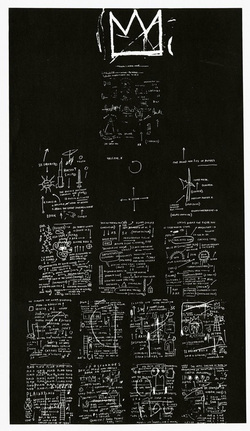
Image to left by Jean Michel Basquiat


Ever meet someone who in every aspect of their being exuded something regal, above but not with effort, prideful but not egotistical?  This describes Jasmine to a T (bag that is). 

We met through one of my research contacts: she was one of our local logistics people, who handled everything as well as everyone.  Her English was impeccable as were her demeanor and appearance.  Weekly she had a new haircut – dramatically shortened one time, amazingly braided and longer the next, Kid n’ Play another.  It was like having a one-woman BET (Black Entertainment Television) session or would it be AET cause she was African?  Daily her outfits were astonishing – linen was her thing which came in every color and every design you could imagine, pressed as if it has just come from the dry cleaners.  Nothing impressed you about Jasmine as much as her smile.  When her face would light up, clouds would part and somewhere music chimed, like a good soundtrack should.

As the Rwandans we generally met were closed, reclusive and quietly hostile, Jasmine was engaging, open, helpful, charming, kind, commanding and pleasant.  The difference could be explained in part because she was brought up abroad – like many who had recently returned.  The local culture had not gotten to her yet. 

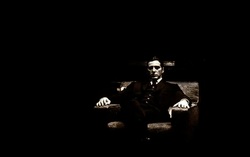
Now, this said, Jasmine was not overly any of these things.  She would explain but never give too much detail.  She would assist us but never fully deliver.  She would take us somewhere but never quite all the way and when things got tight/tense she would dismiss us from the room, leaving us with glimpses of the secret world she occupied but little understanding.  It was like we were Diane Keaton in the Godfather when the door closed, except they weren’t Italian and this was no movie. 

The regality of which I speak was revealed clearly one day in seemingly the smallest of instances. Jasmine would hold a pen as if she never held one.  Not the award way that Bush Jr. tried to check out at a supermarket but rather the way that one imagined a great writer would hold an instrument. She would walk as if she was nailed to a board – perfectly straight like 6 o’clock.  She seemingly knew everyone or, at least, everyone that we needed to know and equally as important they seemed to know her. 

We went to lunch one time – a new Rwandan place and invariably she would be stared at and someone would approach her.  It was not quite as over the top as the scene in Coming to America with Eddie Murphy when a former subject bows and stuff but it was clear that something was going on and that they were not socio-political equals.  The conversation was short, the head slightly tilted below Jasmine, eyes cast downward.  Something was up, but what? We could never quite figure it out and banana beer was not helping.

Another time, in front of the Milles Collines, I saw her get out of an automobile that made a Hummer look like a Volkswagen Beetle.  The man in the front seat played for the Pittsburgh Steelers (I believe); not just one player but the whole defensive front line.  I saw him/it/them walk around and open the door for Jasmine, who delicately stepped out.  As she left, you saw the window go down, some face peered through smoke (which filled the inside) and then it pulled back.  The window then went up and the truck/tank/airbus pulled off, dragging the surface of the earth with it. Now, because of my family I have seen a bunch of celebrities in a wide variety of settings. Met the late Michael Jackson before all the cosmetic changes and again later after he transformed. Met En Vogue, the late Whitney Houston. Heck, I even met Robert Flack, Aretha Franklin, Dionne Warwick, Barry Manilow as well as a host of Hip Hop artists you have never, ever heard of, but this was some next level blingy type $h@t.

Yet another time, some man approached Jasmine in a restaurant when she had left our table to go to the counter and order.  She seemed to be somewhat familiar with the guy but did not really acknowledge his presence.  The guy’s look was priceless.  Remember when the character in the Bugs Bunny cartoon looked at his friend like a hot dog?  That was the look.  In response, we saw an amazing switch; Jasmine turned from her normally pleasant and engaging self to some off-putting, curt and rude person.  To this, the man appeared to move in close and say something. 

Responding, I thought in a natural and somewhat chivalrous manner, I stood up to assist our host who appeared to be in distress.  My traveling companion and friend, Al (Stam) immediately grabbed me by the arm and pulled me down.  “Do you really want to get into something here?”  He continued, “Do you have any idea what is going on and who is involved?”  He was, of course, correct. I had no idea.  We rarely did.  Who was this guy?  What was the nature of his relationship with Jasmine?  How many guys did he have with him (we later counted 5). 

Part of the strangeness of the situation was derived from my knowledge of what happened during 1994.  Another part of this was Rwandan culture.  It was eerily quiet there – too quiet.  Everyone walked around, worked (usually hacking or pulling something in a field), talked and/or scowled at passersby.  Think of a Brit, add in some Scandinavia and then multiply. Actually, the only time you heard a loud Rwandan was when banana beer and music were involved – a combination that was quite unsettling on more than one dimension.  I always found myself simultaneously more relaxed at seeing Rwandans finally unwind and more fearful at the same sight; did I really want to be present when they let loose?  Nope, is the answer.  Once was enough. 

At the same time, I was frustrated by Rwandan unity and their us-nosity; juxtaposed against my otherness and outsider status. Indeed, I don’t think that I was ever in a situation where I felt that if you called someone out that a whole bunch of people would show up to kick your ass.  This was far, far worse than the time I got off the wrong stop in South Boston (in the 1980s), making it look more like Mr. Roger’s Neighborhood.  Heck, it even made New York’s Alphabet City where Hell’s Angels used to hang out (again in the 1980s) look like a lil bike club. Just something in the way they moved…

I supposed this is the reason that Jasmine stood out.  She was one of them but not.  And every one seemed to know it.

Despite our pleasantries, however, Jasmine and I had one repeated tension.  Because of how she carried herself and interacted with folks, I would constantly call her Princess.  Poking fun, I would go out of my way to open doors, stand up when she left a room and all the rest of the chivalrous package (cue Hugh Jackman in that movie with Meg Ryan, which no one but me seemed to see).  Whenever I did this, Jasmine would get serious and would tell me not to “do such things.”  As it seemed to bother her in an odd way, I continued to push the issue and did it continuously.  I’m just kind of like that (as you have gathered by this time).

One day, Jasmine had come over to remind us about bringing our water bottles – one must continually hydrate when in country.  After she left to check on where our driver was, some person sat down next to us and mentioned that we were lucky to receive such treatment.  Thinking he uttered a sexist remark (with the woman bringing the men some beverage) but unsure, I said “yes, she is very nice.”  Pushing the issue, the gentlemen repeated “no, you are very lucky to receive such treatment from her.  Royalty in Rwanda never performed such duties (pause) historically.”

At that last remark, Al and I looked at each other and I said, “Excuse me?”  The man went on to explain that Jasmine was part of the old Tutsi (my bad - Teabag) royal family who because of the current context kept a low profile.  Some in the country wanted the monarchy to return to power.  At the time, the deposed king was hiding in the Northeast of the U.S. 

But, I digress.  When told that Jasmine was royalty, we couldn’t believe it.  At the same time, it made perfect sense.  Al immediately started laughing and repeatedly did so during the trip because of how many times I put my foot in my mouth. 

Upon being confronted with our new information and asked why she never told us, Jasmine blushed and said that she thought we knew.  I said that I did not and apologized for any discomfort/danger we put her in.  As she said, “it was alright”, she tried to put a happy face on the whole thing.  Al continued to laugh and in fact he did this for months, unable to believe how incredibly stupid I had been and how simply hilarious the situation was.  We literally got the royal treatment and in many ways at once.

0 Comments

The Godfather of Survival - Tales from Rwanda, Part 16

8/16/2013

2 Comments

 
Picture
Between 1999-2004 I traveled around Rwanda during research. Many things happened on my trips and it is only now that I start to share them.
 
The meeting was set. We were picked up by Innocent and a rather well-built gentleman driving the car also named Innocent – I mentioned that this was a common name, no?  Greetings were exchanged which took about 15 to 20 minutes and then we were off. 

There was little chatter on the ride. All eyes moved in different directions but our minds were clear. We were going to meet one of the leaders of the largest Tutsi survivor organization: Ibuka. The group that formed shortly after the violence was completed -- bridging makeshift support groups, church organizations, NGOs and politically oriented individuals across Rwanda. Given the significance of the victimized group -- has told, they were the primary targets of violence in their numbers dwindled to basically nothing in the short time of it because they were killed but they had to flee.

After driving for quite a while we pulled up to a wall. The driver signaled to some guy with a machine gun, who in turn signaled to another individual in the metal gate retracted -- slowly and loudly. Once the door was open enough, the car pulled in -- revealing about 5 to 6 armed guards, several trucks and about a dozen people mulling about. No one pays any attention.

Out of the car, we walked up some stairs, through a door, down the corridor and up into another area. Here the guard stopped. Innocent, the first one, walked in with us and he then sent down -- gesturing that we should join them. The anticipation was immense: what is the leader of a Tutsi survivor organization like? What was he before the killing? What is he now?

I don't know who I expected to walk in but it was not the man who came through the door. He was small, old, meek and with a set of front teeth that could best be described as a free-for-all. Catching myself it occurred to me that perhaps America warps one's sense of leadership. The men had no suit, no manicure, no hairdo, seemingly no charisma at all - at least by my as yet unidentified but evidently existing standards. That said, he was one of the leaders of the organization so there must have been something there. Perhaps I just couldn't see it. After lightly shaking our hands, he sat down, the back of the chair seemingly swallowing him as he crouched into it.

Jumping right in, he told us of the beginning of his organization. There were hundreds of small groups all over he said. One by one we started bringing them together, giving us our voice. He then spoke of the current government. Smiling devilishly he said, “we disagree on a great many things but they have made great strides.” All the while Innocent, the first one, sat there obedient, quiet -- I've not seen him this way previously. Normally he had such a commanding, powerful presence. In front of us. However, now he was a different individual entirely. It made me think of some of the ministers of the Nation of Islam on their own as opposed to being in front of Farrakhan or some other leader. No smiles, no bow ties, no side conversation, just nods of approval and looks of seriousness.  Every now and then a guy with a machine gun would show up to inquire about beverages and refills. We always said no. No need to bring him back too much, I thought.

The leader then spoke of the government efforts at truth and reconciliation – Gacaca.  “These are flawed, very naïve strategies” he began. “There were not even created with such grave activities in mind -- historically. They were community level courts that address small grievances like theft or property violations. How do you go from one to the next? How do you go from stealing a chicken to killing family?  Very poorly,” he said.  “Very poorly. We watch all of these things. But quantum. Talk to the government about our concerns. Write about them. We have hope that there is a way to go.”

“And what is it that you wish to do,” he said to me, almost shocking me with his return to a two-way conversation. I started to explain but shortly into our conversation he began to say that “it is important -- your work.  The truth must be known. If we can help, we are more than willing to do so.” He gestured to Innocent, the first one, identifying him as a useful collaborator. We then chimed in that we would like to take the study that they conducted in Kibuye (a house by house survey of who was left and how individuals died) and replicate that throughout the country. He had clearly been told about our interest and smiled, crookedly. “Yes, that would be nice.” Quickly he added, “but be careful though.” At saying this, he stood, walked to a bookshelf, pulled out a book and put it in front of us. “This person sought the truth. They provide one of the most thorough investigations of what happened in the relevant commune. Very good. Very good work.”  Looking at his watch and beginning to move toward the door, he said both quickly and directly, “the author died – unfortunately.  Be careful.”

With that, innocence stood (the concept not the man), the door opened, we were escorted out and driven back to the Milles Collines by a different driver – we did not get his name either.  Sitting down in the car, Al (Stam) and I looked at one another and looked out the window. We did not speak. After we got out and wave goodbye, we went in to get a drink but ended up having about three. We were not exactly sure why we needed one know what happened at the meeting but we felt that after meeting the godfather of survival one needed to toast one’s own.

2 Comments

Dressed Not to Kill - Tales from Rwanda, Part 15

8/5/2013

1 Comment

 
Picture
Note: Between 1999-2004 I traveled around Rwanda during research. Many things happened on my trips and it is only now that I start to share them.

It will sound a little stupid (and somewhat arrogant), but I think I could have transformed Rwandan society with 

            10 blue blazers

            10 raincoats

            10 umbrellas and

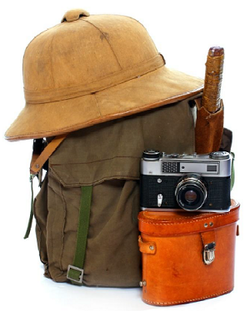
            5 indiana jones hats

The logic is simple:

Go to any hotel, bar, restaurant, sidewalk or marketplace in Rwanda and you see people trying to look their best.  Despite the level of poverty, fashion means a great deal to the Rwandans and as something of a sartiorialist/dandy - my inner New Yorker, on this dimension I fit right in.

You see African dresses on the women and traditional fabric on some males. But most of the time you see men adorning themselves with the garb of a “gentlemen”:

            Shirt

            Jacket

            Hat

            Shoes

            Tie

If they have these items they will wear them and if they do no, then they will acquire them in this order of priority.  I would have figured that shoes went higher in the pecking order but I think that these are just a harder item to acquire and thus they fall a bit down. The position of the tie makes sense.  GIven the sun, I would have placed the hat higher but there is something about the necessity of a shirt.    

In even the most remote villages, the process is clear.  You pull up in some dirt poor place with mud houses, straw roofs, banana fields and winding roads cutting through hills, searing heat. In the background, people tend emaciated cows and children sit on the side of a hill buck naked. and then you pull up

                        first, the kids arrive to check you out – they generally have little to no clothing

                        second, some older folks show up (30+ because life-expectancy is low) to see what you will do.  

Interestingly, there is not one complete outfit among them.  Most have pants, some have a shirt, others shoes

At some point, the crowd parts and the local leader emerges –

                       - The Nyumba Kumi (the government, official appointed in every 10 households to oversee the comings and 
                         goings)

      - The Nyumba-Kumi always has a full outfit almost as if these were passed out when they signed up

These are not the only sartorial differences one sees. Once in a place and given the reality mystery tour you see other  
         garmented-coded dynamics:

                                                Pants and raincoat – usually an older gentlemen

                                                Pants and t-shirt – younger gentlemen

                                                Traditional fabric wrap – all women

                                                Hat, shirt and wrap – miscellaneous men

                                                No shirts – rural and poorer men

The hierarchy is this transparent. It’s right there.  In Rwanda, the clothes make the man/woman as well as the society.  And, this society is one composed of immense economic inequality between the haves, have nots, never hads and never gonna gets while the first gots. Of course, I remembered the line from Meryn Cadell: "if the clothes makes the man, and the woman makes the clothes, then what does that make the woman", but I digress.

Reflecting on the clothing situation, this is where I had my idea; my Rwandan conversion strategy:

One could give out the jackets and other stuff randomly to people on the road who could then wear them.

Upsetting a balance or equilibrium, this would upset almost all of the socio-political dynamics in the society.  Walking into a village, one would not encounter one jacket but there would be two.  Walking up a hill, you would find not two hats but three.

The gear need not be too nice: H&M over DKNY.  Here, symbol seems to be more important than style.       

Of course, the imbalance might not be all good.  There might be a reason why there is only one blazer in a community.  If this is the case, however, it suggests a heightened degree of fragility.  If one lost suitcase from a stylish New Yorker or San Franciscan could send all of Rwanda into a tailspin, from the bottom, then this does not seem to represent the paragon of stability that most think of when they consider the country.            


1 Comment
<<Previous

    Analog - The Anti-Blog

    By "Analog" I am referring to the adjective (i.e., relating to or using signals or information represented by a continuously variable physical quantity such as spatial position or voltage) and not the noun (i.e., a person or thing seen as comparable to another) for I wished to give voice to my thoughts which have come to me in a more or less continuous manner but which do so in a way that is not consistent in content or form. Thus you will see short stories, brief thoughts, haikus, low-kus and even a political cartoon or two. 

    Winner of Best Blog Post for 2014 by International Studies Association

    Picture

    Archives

    December 2025
    May 2024
    April 2024
    November 2023
    December 2022
    October 2022
    March 2022
    February 2022
    May 2021
    April 2021
    January 2021
    August 2020
    July 2020
    June 2020
    May 2020
    May 2019
    April 2019
    March 2019
    May 2018
    April 2018
    March 2018
    February 2018
    January 2018
    July 2017
    June 2017
    May 2017
    April 2017
    March 2017
    February 2017
    December 2016
    November 2016
    October 2016
    September 2016
    July 2016
    June 2016
    April 2016
    March 2016
    February 2016
    January 2016
    December 2015
    November 2015
    September 2015
    June 2015
    May 2015
    April 2015
    March 2015
    December 2014
    September 2014
    March 2014
    February 2014
    January 2014
    December 2013
    November 2013
    October 2013
    September 2013
    August 2013
    July 2013
    June 2013
    May 2013
    April 2013
    March 2013

    Categories

    All
    Activism
    Art
    Black Power/nationalism
    Communication
    Counter-terrorism
    Data
    Database
    Education
    Elitism
    Ethnicity
    Fashion
    Friends
    Genocide
    Global Blackness
    Hip Hop
    Human Rights Violation
    Identity
    India
    Inequality
    Memories
    Norway
    Passing
    Political Conflict
    Political Tourism
    Political Violence
    Poverty
    Racism
    Republic-of-new-africa
    Research
    Revolution
    Rwanda
    Sexism
    Social Media
    State Repression
    Struggle
    Terrorism
    Travel
    United States
    Untouchability

    RSS Feed

Picture