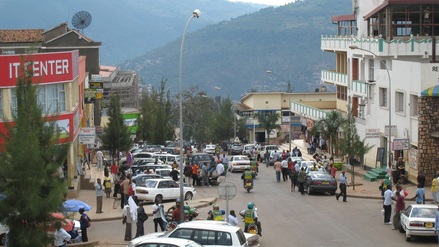
Between 1999-2004 I traveled around Rwanda during research. Many things happened on my trips and it is only now that I start to share them.
In my junior year of college, I was driving back to Worcester, Massachusetts from New York City with my oldest friend – Wycuie Bouknight. Wycuie is a tall, thin, dark-skinned and occasionally chatty prince of the city that I have known since fifth grade. We had ended up at the same undergraduate institution by accident and after trying to live with other people, we ended up as roommates. After some holiday, we decided to drive back up to school – late in the evening. The ride up was a combination of jokes, music, reflections, worries, insights and aspirations.
At one seemingly deserted rest stop, we pulled up, went to the bathroom and then began to pull away. Upon doing so, I realized that I had forgotten something in the bathroom. When we turned around to go back, we were surrounded on all sides by three different police cars. After turning all the lights in the parking lot on us and pulling out their weapons, the officers approached the car; the blood quickly left my body. Although they approached us on both sides, I was glad that Wycuie was driving for he would get all the questions – or, at least, that was what I thought.
One cop came to my side, aggressively tapped the window for me to lower it and began to ask questions: “where are you going?”
“Back to school,” I replied.
“What school?”
“Clark University in Worcester, Massachusetts.”
“Do you have id?”
I waited because I thought they were talking to Wycuie. He repeated his request while walking even closer to the car. Scared to death, I gave him my id.
“What is your name?” He asked.
I never understood this. He has the id, why is he asking the freaking question? “Christian Davenport,” I said, barely squeezing it out.
Another car arrived and two more officers came out.
“When were you born,” he continued.
My mind was blank. I couldn’t remember my birth day. Then after a long pause, “June. In June.” I stammered. Then after another long pause, I blurtered out, “I’m a Gemini.”
At this, the police officers and Wycuie laughed in an almost uncontrollable fashion. The guns were put away, the officers left and we pulled off – never to stop or speak for the rest of the trip. We would speak of the incident later, especially repeating the comical break at the end, but the seriousness of that moment caught us both – one second, one mistake, one twitch – we were shot, it was just that simple.
I thought of this incident hitting my first roadblock in Rwanda. Many of the elements were the same: men with guns, attitude, a road that could not be passed, uncertainty, fear. Several elements were different: I did not speak the language, the guns were not handguns but machine guns, guns were not being pointed at anyone – they were just being carried in a casual fashion, the number of cops involved in the process was seemingly endless: there were the two in the middle of the road, there were the six conducting searches of stopped vehicles, there were the ten sitting on the side of the road for back up and there were another five or six taking a wiz on a tree.
This was perhaps the only time I did not mind my Mizungu status. Slow down, the driver would either know someone at the block, say something to him that would convince him that we were safe or show him papers. The guard would look in and either pull us to one side or wave us through. We were easy to spot. We currently had one person in a seat and we were spread out in the automobile. This differentiated us from the other cars that had five to six persons per seat as well as a few more holding on the outside.
The guards faces were indifferent, cold, unmoving and ready for action. The faces on that road in Worcester had been more varied. All were white but some were relaxed – enjoying the test of wills and the seriousness of the action. Some were angry – waiting for someone to start so that they could finish. Some were pleasant (rarely) – doing their job with a degree of professionalism, never acknowledging that the “Driving While Black” Christian and Wycuie takedown was the reason we had been stopped.
In contrast, I got nothing from the Rwandan faces. Clearly, however, the difference were there. Other cars, busses and vans that were stopped had their doors immediately opened, individuals were trotted out and searched on the roadside.
I was told these were standard “security measures.”
“What are they looking for,” I asked.
“Weapons,” I was told – matterfactly. “People that aren’t supposed to be where they are not supposed to be.”
“Who is that?”
To this, I hit that wall around which you could never pass in Rwanda. “So wide, you can’t get around it; so low, you can’t get under it; so high, you can’t get over it.” There is a place beyond which one cannot pass. There are questions that cannot be asked. There are places where one could not go.
Of course, things would not stay the same. On each trip to Rwanda, the roadblocks would be fewer. The guns would be less numerous. The guards less apparent from everyday life. These would normally be good signs – signals of an opening, a reduction (like the Surge in Iraq). But, what did they signal here? Something different? Something darker?
My take was the latter. One reason why you pull back security and reduce road stops is because there was nobody left to fear. Once the enemies of the government go abroad, get shot, go to jail or hide, there is nobody left to stop. With no one left to fear, the road opens. You were now partially free to move about the country – albeit slowly.
Now, a trip up to Worcester was a different matter, a different story. There are plenty of people left to stop in the states.
In my junior year of college, I was driving back to Worcester, Massachusetts from New York City with my oldest friend – Wycuie Bouknight. Wycuie is a tall, thin, dark-skinned and occasionally chatty prince of the city that I have known since fifth grade. We had ended up at the same undergraduate institution by accident and after trying to live with other people, we ended up as roommates. After some holiday, we decided to drive back up to school – late in the evening. The ride up was a combination of jokes, music, reflections, worries, insights and aspirations.
At one seemingly deserted rest stop, we pulled up, went to the bathroom and then began to pull away. Upon doing so, I realized that I had forgotten something in the bathroom. When we turned around to go back, we were surrounded on all sides by three different police cars. After turning all the lights in the parking lot on us and pulling out their weapons, the officers approached the car; the blood quickly left my body. Although they approached us on both sides, I was glad that Wycuie was driving for he would get all the questions – or, at least, that was what I thought.
One cop came to my side, aggressively tapped the window for me to lower it and began to ask questions: “where are you going?”
“Back to school,” I replied.
“What school?”
“Clark University in Worcester, Massachusetts.”
“Do you have id?”
I waited because I thought they were talking to Wycuie. He repeated his request while walking even closer to the car. Scared to death, I gave him my id.
“What is your name?” He asked.
I never understood this. He has the id, why is he asking the freaking question? “Christian Davenport,” I said, barely squeezing it out.
Another car arrived and two more officers came out.
“When were you born,” he continued.
My mind was blank. I couldn’t remember my birth day. Then after a long pause, “June. In June.” I stammered. Then after another long pause, I blurtered out, “I’m a Gemini.”
At this, the police officers and Wycuie laughed in an almost uncontrollable fashion. The guns were put away, the officers left and we pulled off – never to stop or speak for the rest of the trip. We would speak of the incident later, especially repeating the comical break at the end, but the seriousness of that moment caught us both – one second, one mistake, one twitch – we were shot, it was just that simple.
I thought of this incident hitting my first roadblock in Rwanda. Many of the elements were the same: men with guns, attitude, a road that could not be passed, uncertainty, fear. Several elements were different: I did not speak the language, the guns were not handguns but machine guns, guns were not being pointed at anyone – they were just being carried in a casual fashion, the number of cops involved in the process was seemingly endless: there were the two in the middle of the road, there were the six conducting searches of stopped vehicles, there were the ten sitting on the side of the road for back up and there were another five or six taking a wiz on a tree.
This was perhaps the only time I did not mind my Mizungu status. Slow down, the driver would either know someone at the block, say something to him that would convince him that we were safe or show him papers. The guard would look in and either pull us to one side or wave us through. We were easy to spot. We currently had one person in a seat and we were spread out in the automobile. This differentiated us from the other cars that had five to six persons per seat as well as a few more holding on the outside.
The guards faces were indifferent, cold, unmoving and ready for action. The faces on that road in Worcester had been more varied. All were white but some were relaxed – enjoying the test of wills and the seriousness of the action. Some were angry – waiting for someone to start so that they could finish. Some were pleasant (rarely) – doing their job with a degree of professionalism, never acknowledging that the “Driving While Black” Christian and Wycuie takedown was the reason we had been stopped.
In contrast, I got nothing from the Rwandan faces. Clearly, however, the difference were there. Other cars, busses and vans that were stopped had their doors immediately opened, individuals were trotted out and searched on the roadside.
I was told these were standard “security measures.”
“What are they looking for,” I asked.
“Weapons,” I was told – matterfactly. “People that aren’t supposed to be where they are not supposed to be.”
“Who is that?”
To this, I hit that wall around which you could never pass in Rwanda. “So wide, you can’t get around it; so low, you can’t get under it; so high, you can’t get over it.” There is a place beyond which one cannot pass. There are questions that cannot be asked. There are places where one could not go.
Of course, things would not stay the same. On each trip to Rwanda, the roadblocks would be fewer. The guns would be less numerous. The guards less apparent from everyday life. These would normally be good signs – signals of an opening, a reduction (like the Surge in Iraq). But, what did they signal here? Something different? Something darker?
My take was the latter. One reason why you pull back security and reduce road stops is because there was nobody left to fear. Once the enemies of the government go abroad, get shot, go to jail or hide, there is nobody left to stop. With no one left to fear, the road opens. You were now partially free to move about the country – albeit slowly.
Now, a trip up to Worcester was a different matter, a different story. There are plenty of people left to stop in the states.
 RSS Feed