• Opening
  • Basics
  • Research
  • Writing
  • Teaching
  • Media
  • Scholarism
  • Audio/Video
  • Podcasts
  • Students?!
  • Archiving
  • Art
  • Analog (the anti-blog)
  • Other Blog Entries
  • Webpages
  • Glorious Failures
  • American Academy of Arts and Sciences Event
  • Art of Dom and Res Syllabi
  • domination and resistance recordings
  • Anti-Black Human Rights Violations
  • Repression 101
[Christian Davenport]

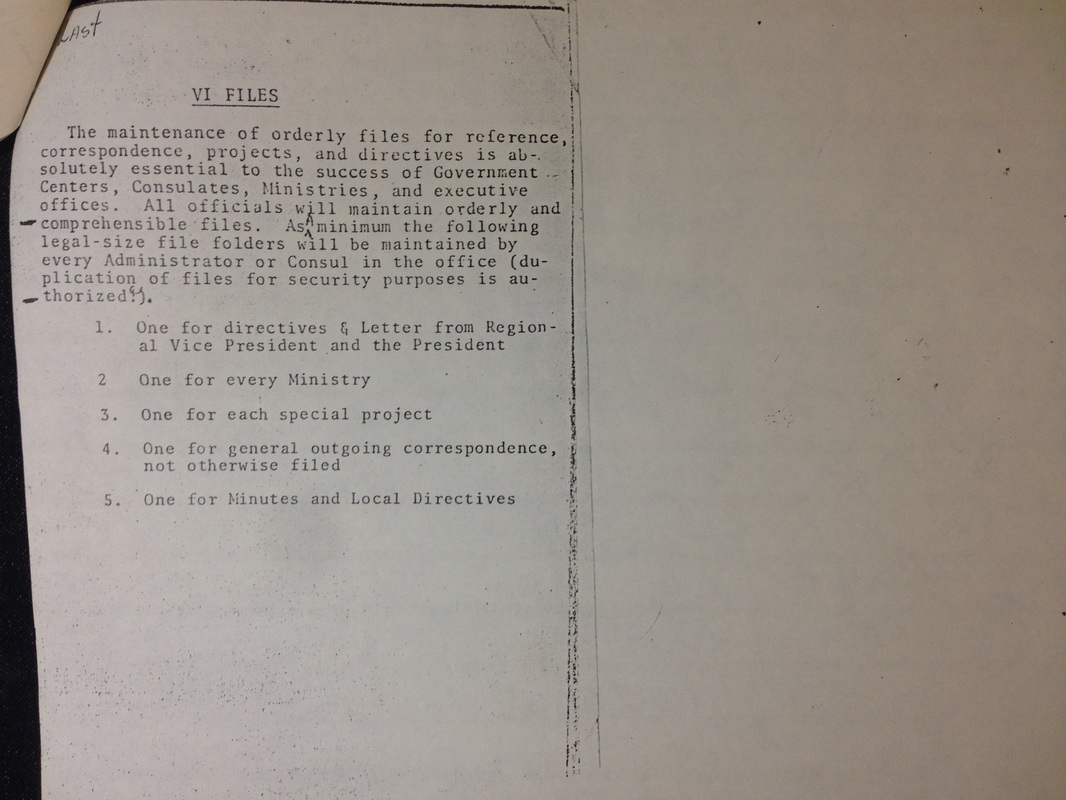
Any World (That I'm Welcome to)...... Anti-Black Behavior, the Desire for Community & the Republic of New Africa

11/13/2015

2 Comments

 
Picture
I always liked Steely Dan.  Strange place to start a piece concerning black nationalism but stay with me for a second.  There is just something about Steely Dan's calm melodious funk that just does the trick.  I listen to it when editing something I have written.  It doesn't get in the way like some music.  It kind of facilitates.  One song in particular has always resonated with me: Any World (That I'm Welcome to).  You probably know it:

If I had my way
I would move to another lifetime
I'd quit my job
Ride the train through the misty nighttime
I'll be ready when my feet touch ground
Wherever I come down
And if the folks will have me
Then they'll have me

Any world that I'm welcome to

Is better than the one I come from

I can hear your words
When you speak of what you are and have seen
I can see your hand
Reaching out through a shining daydream
Where the days and nights are not the same
Captured happy in a picture frame
Honey I will be there
Yes I'll be there

Any world that I'm welcome to

Is better than the one I come from

I got this thing inside me
That's got to find a place to hide me
I only know I must obey
This feeling I can't explain away
I think I'll go to the park
Watch the children playing
Perhaps I'll find in my head
What my heart is saying
A vision of a child returning
A kingdom where the sky is burning
Honey I will be there
Yes I'll be there

Any world that I'm welcome to

Is better than the one I come from


I always viewed the song as hopeful.  It suggested that if you did not currently have a home and you were not currently being embraced by some community, that it was possible that you might one day.  In some distant future, you will find your peeps, be embraced and walk right on in.

The discrimination directed against African Americans since their coming to the United States has not provided much of welcoming.  Enslavement was simply hell: beatings, torture, rape, forced labor, medical experimentation, and outright killing.  Post enslavement, things were only better in certain ways. Despite being freed from bondage, they were lynched, burnt, sent back into a version of slavery, threatened, rounded up as "vagrants" and worked in prisons, worked to the bone in factories as the lowest on the totem pole, kept out of housing, good schools, good supermarkets and rendered ever fearful that there situation could slip back into some vortex of violence reminiscent of Octavia Butler's Kindred or Haile Germ's Sankofa.  

Given this situation, it makes sense that African Americans would believe in the distant hope of democratization and democracy studied so carefully by Ralph Bunche in "The Political Status of the Negro in the Age of FDR".  Confronted with the realities that this might not sufficiently address all of their problems, it also makes sense that blacks would try to think of some other way to be welcomed.  Indeed, this explains black interest in science fiction like that put forward by the Afrofuturists.  "Any world that I'm welcome to" - even if that world is on another planet or set in the future.  Ever see that Deep Space 9 episode where it was shown that Deep Space 9 existed in the mind of some African American set in the 1950s who
was suffering from a host of discriminatory problems. In his pain, he created the idea of Deep Space 9, which you then were led to wonder about as it was not clear if it really existed or it just existed in the mind of the oppressed black writer. "Any world that I'm welcome to".

Similarly, one could view black nationalism as an attempt to make a world, rather than wait for one to arrive and/or be handed to them.  In a version of a Tribe Called Quest lyric, black nationalists seem to have concluded that "If your state is an ass and your police force is a jerk, leave 'em both alone and create yourself a @." As I am not a rapper, I do not need to finish the line.  You get the point.  

Now, creating that place of welcoming was not an easy thing to do.  Few attempts were put forward but one that I am familiar with concerns the group called the Republic of New Africa (RNA) - the topic of my last book "How Social Movements Die".  The RNA concluded that America was not for them - indeed, they concluded that America was out to kill African Americans.  Rather than go back to Africa like Garvey and many white racists suggested, however, the RNA decided to take a different path.  They were like: we built much of the country and we still live in numerous parts of the deep south in numbers that make it look as if they were the majority. They decided that they should be given/take these states and create their own nation.  

What was this nation and what was this idea of theirs?  Steely Dan illuminates: 


I got this thing inside me
That's got to find a place to hide me

The black nation.  That was their idea.  A place where they would not no fear.  A place where all dreams hindered by the racist America could be fulfilled.  A place of peace and harmony and collective productivity.  It was "Exit" in the Albert Hirschman sense or Escaping the state in the James Scott sense.  


Perhaps I'll find in my head
What my heart is saying


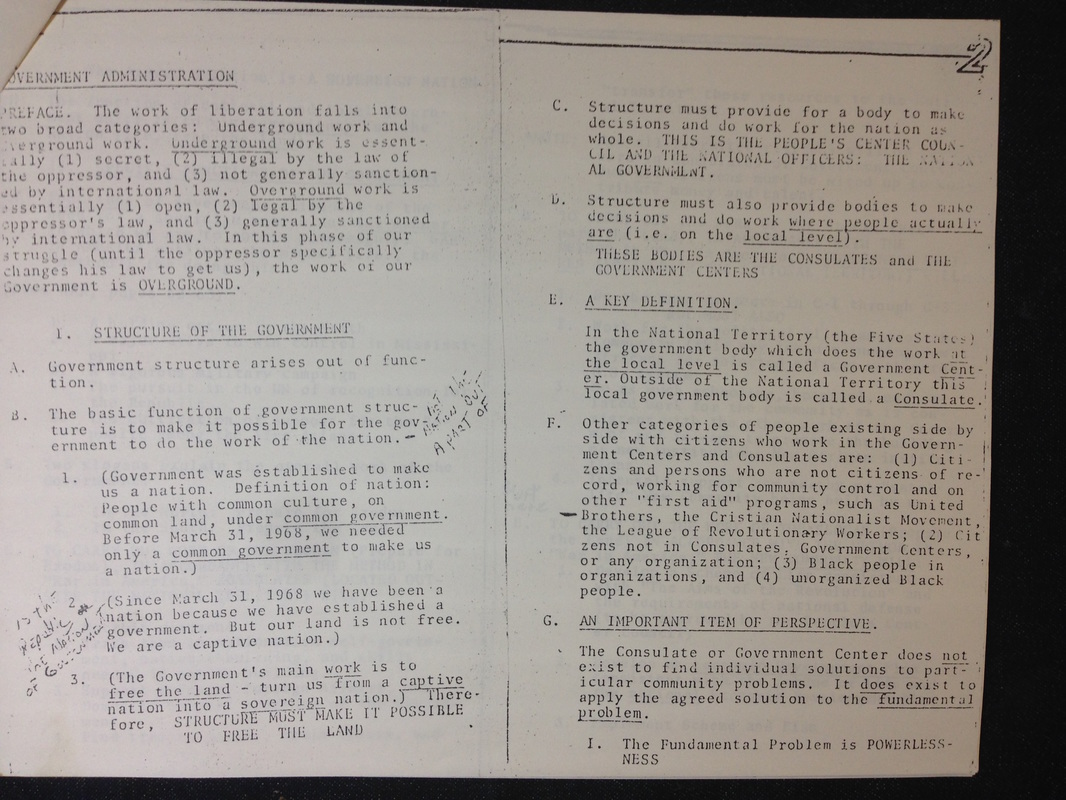
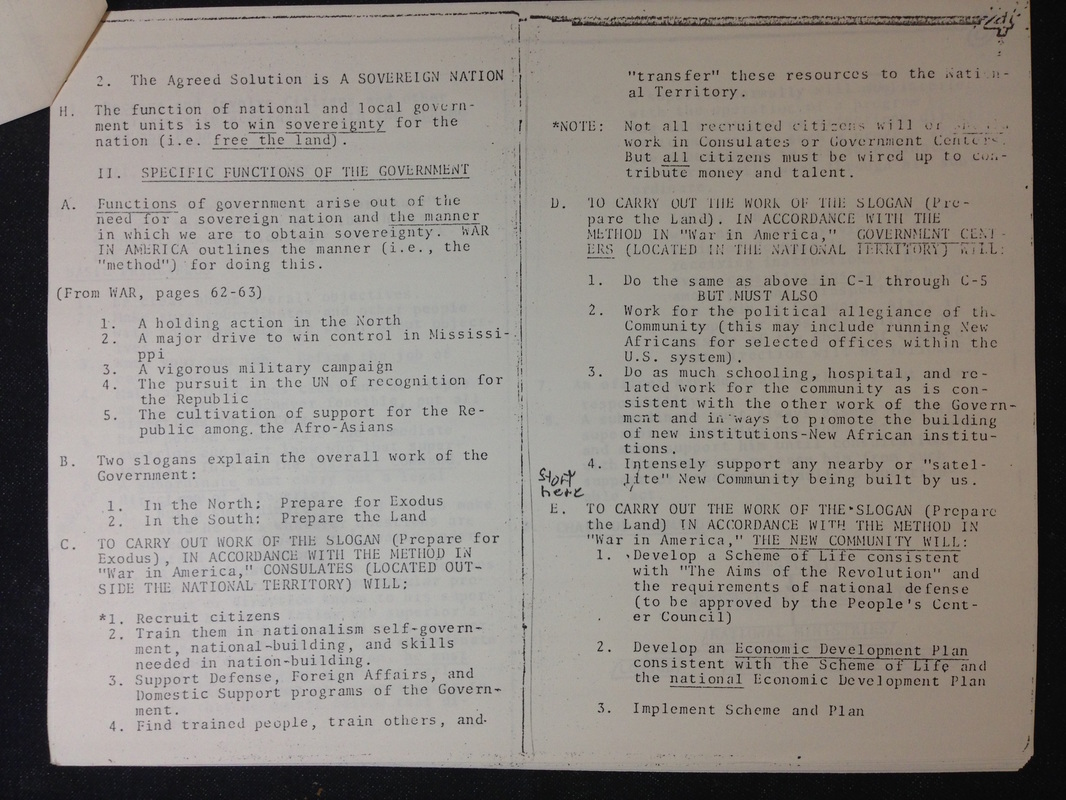
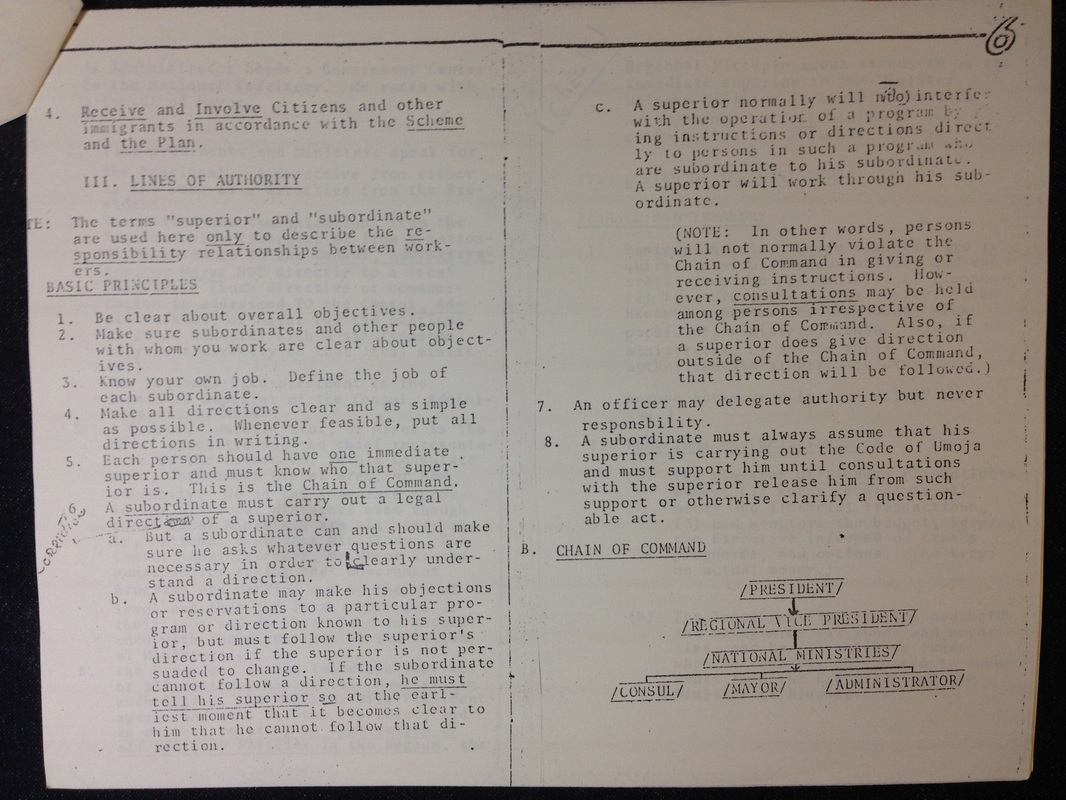
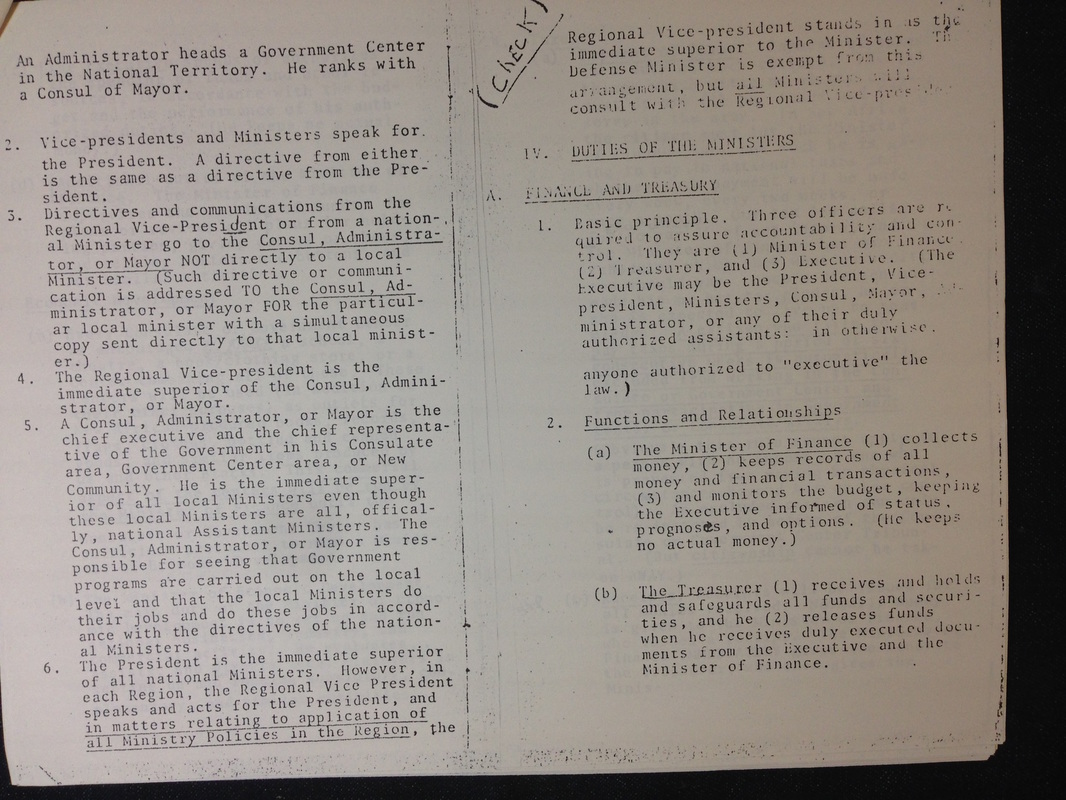
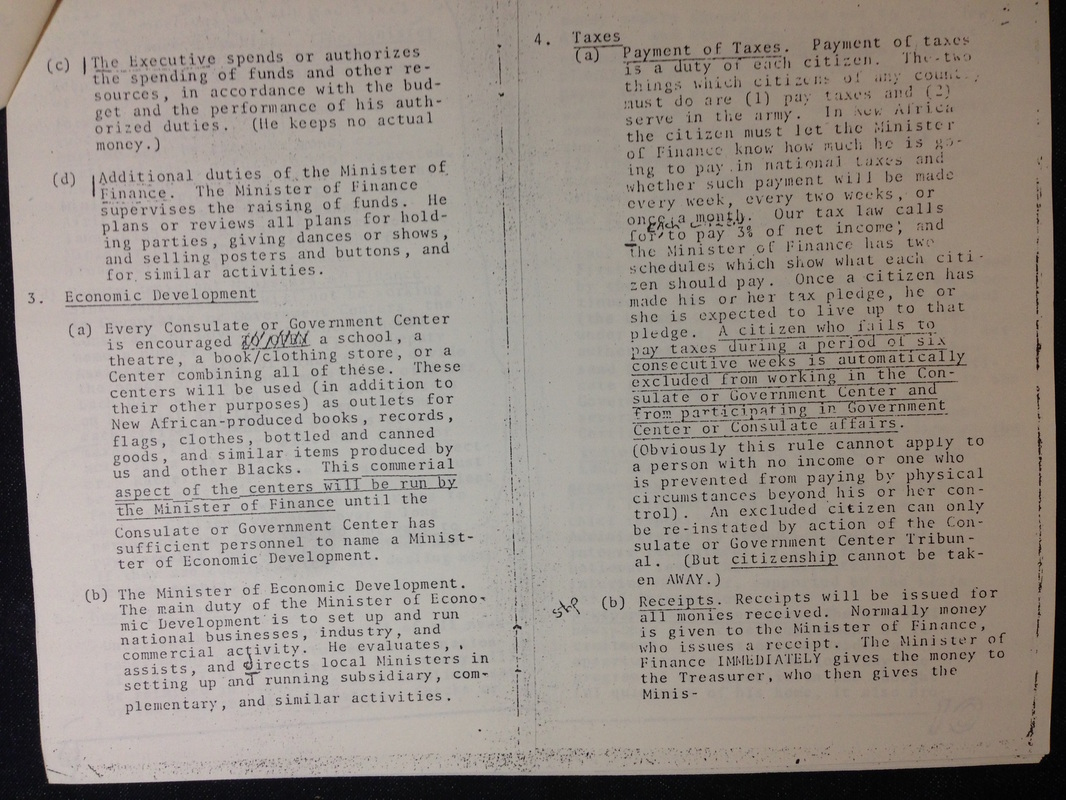
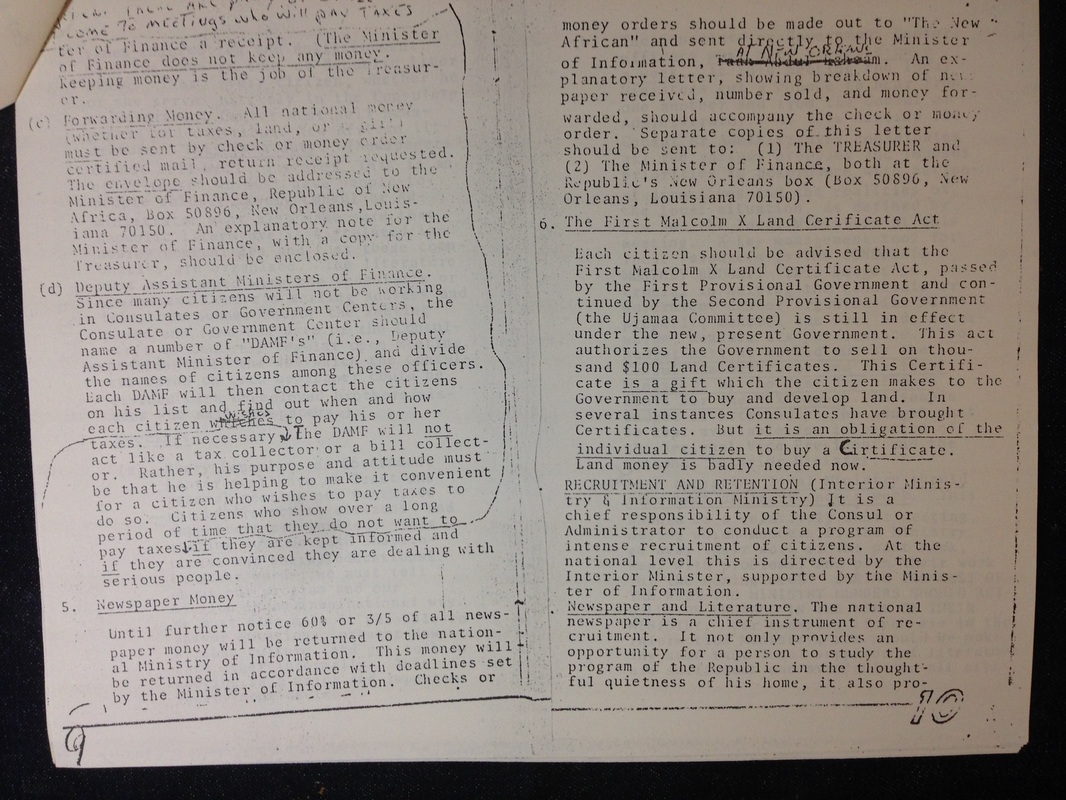
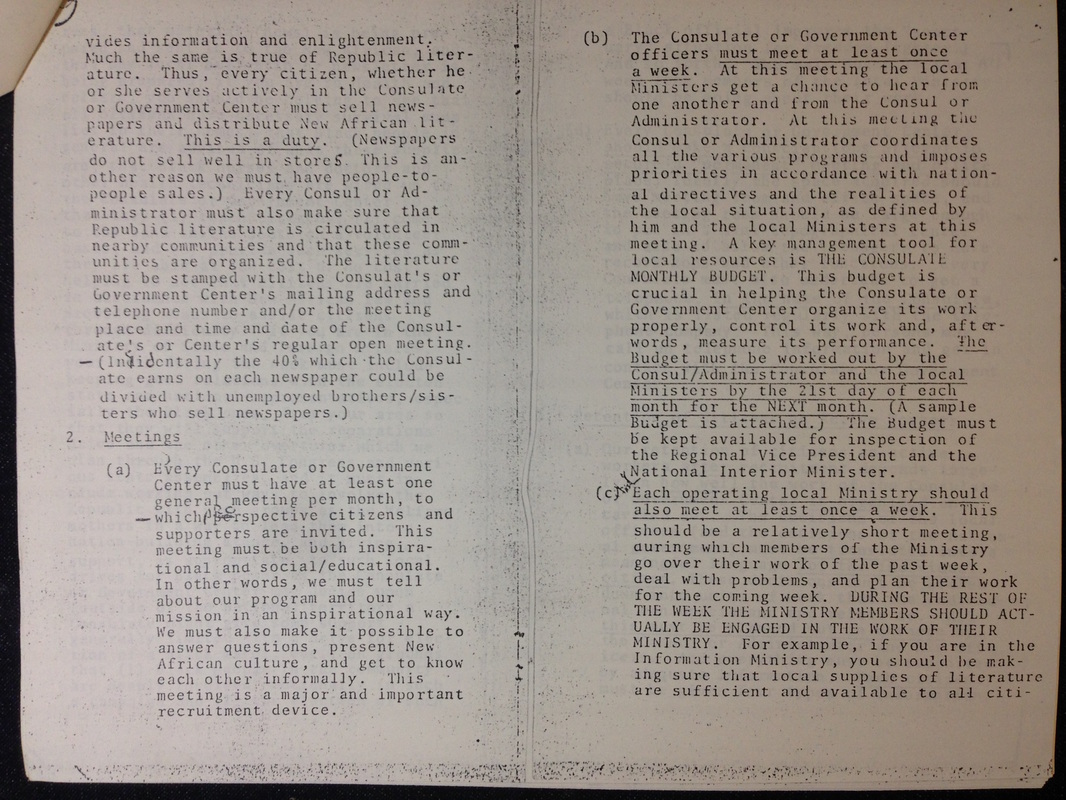
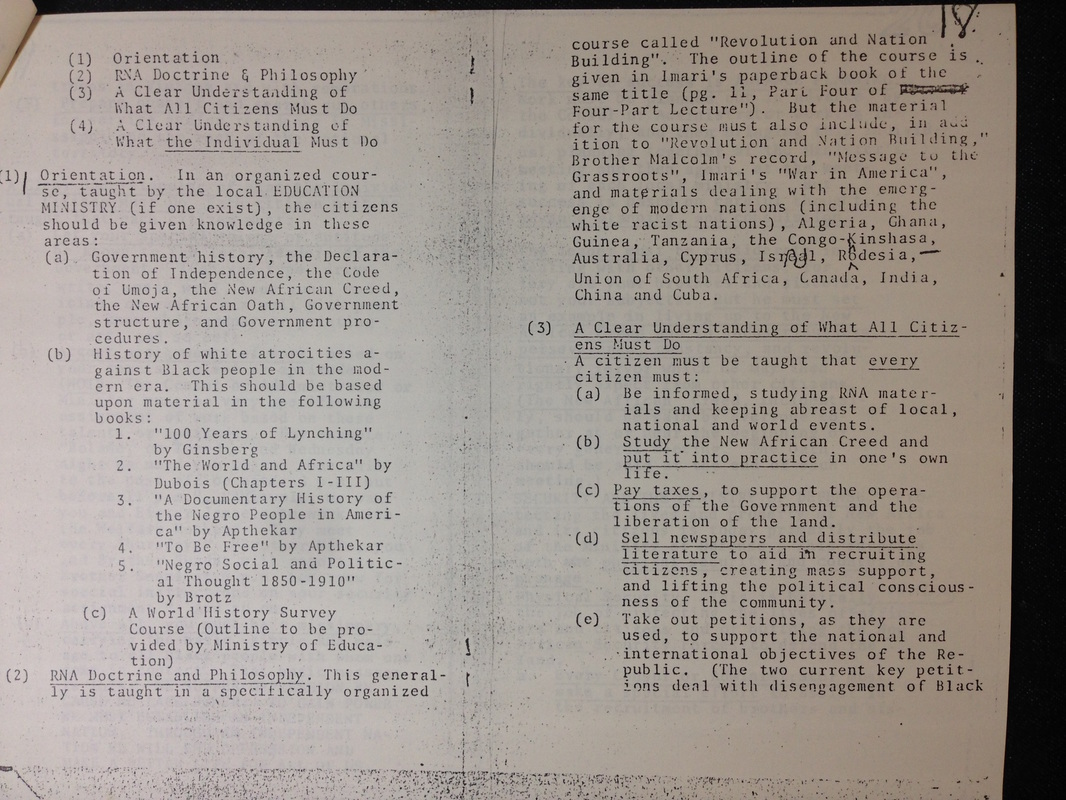
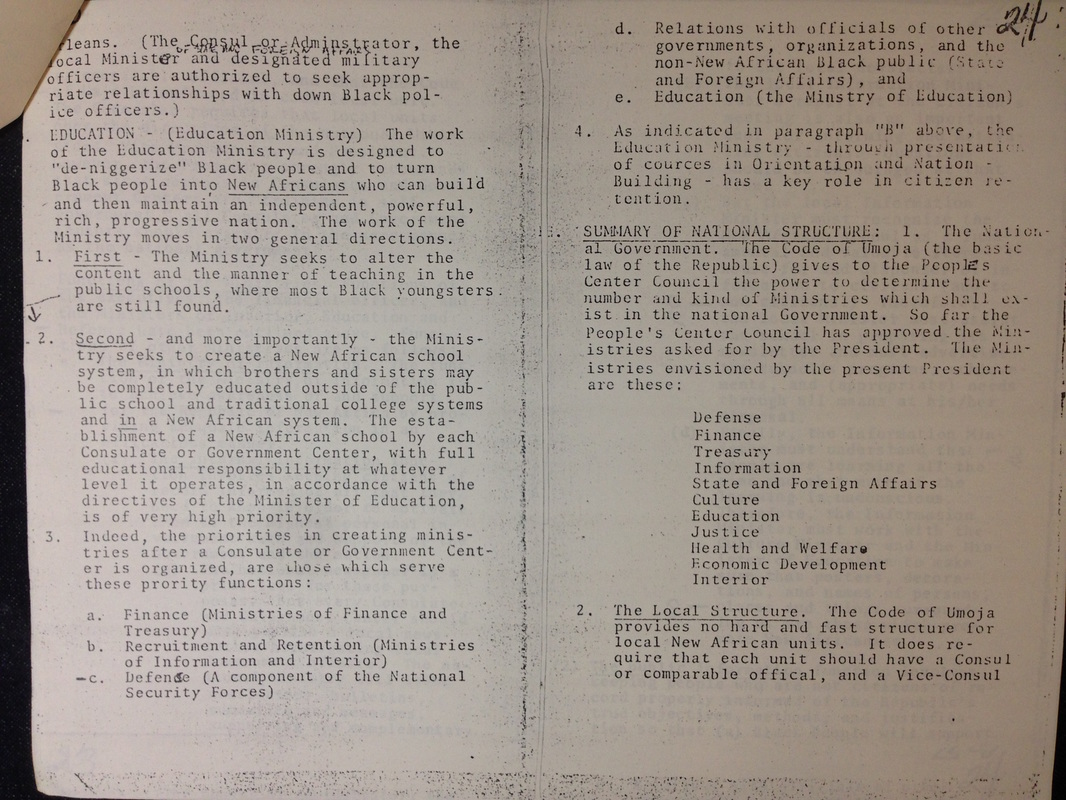
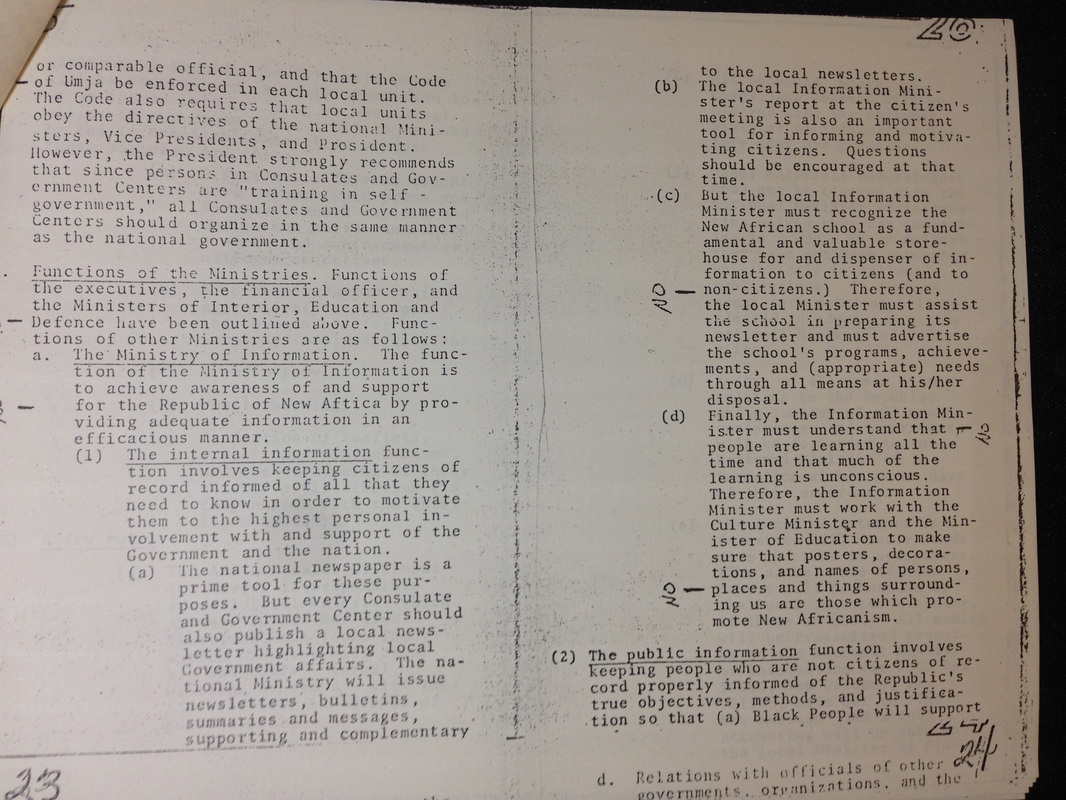
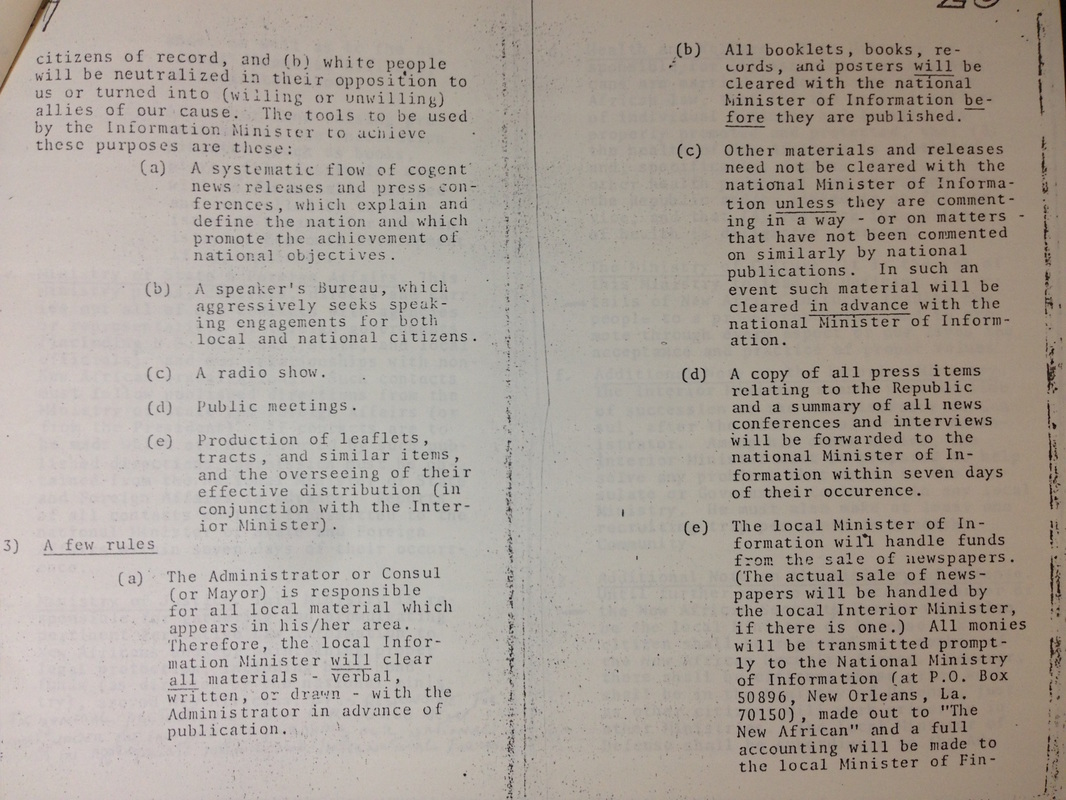
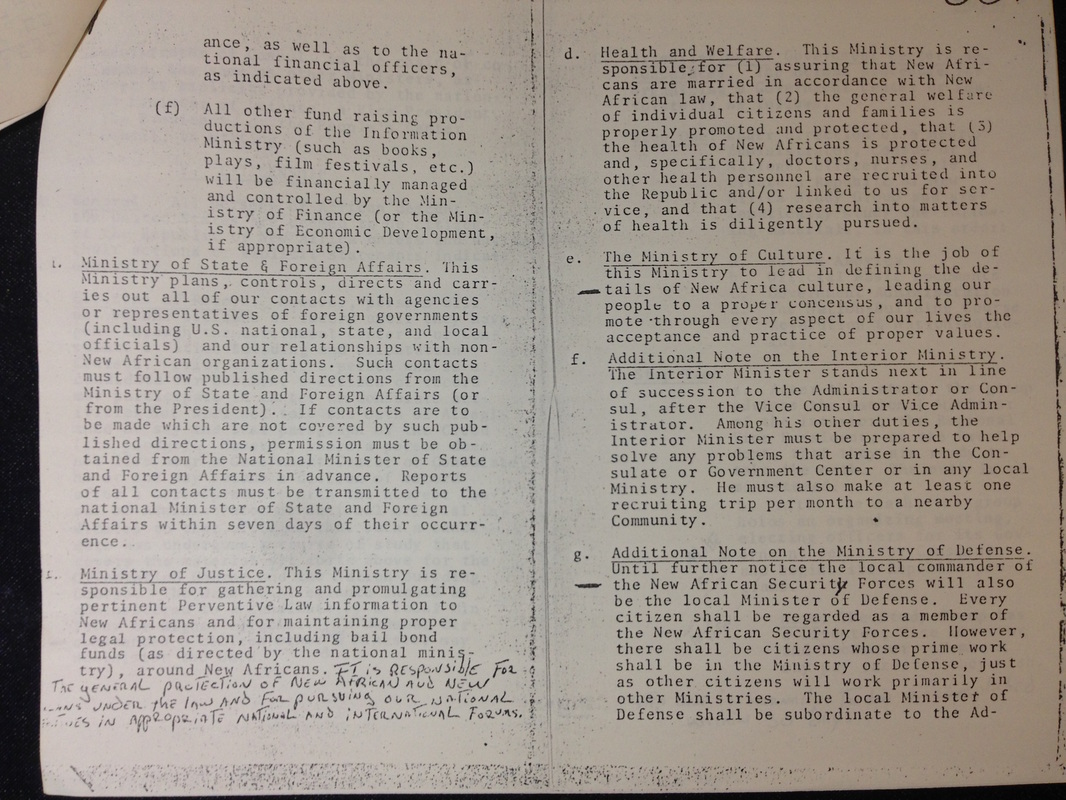
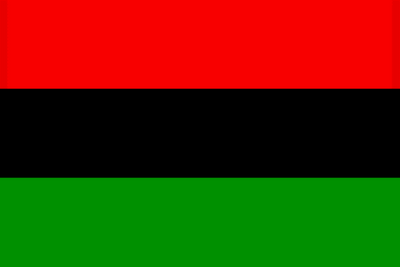
​As we see the burgeoning national and international attention given to the newest version of the African American plight in the US (e.g., "Black Lives Matter") and the piecemeal efforts put forward to address them: e.g., body cameras, commissions of inquiry, talk shows and the like, it is worthwhile to look back some other efforts - ones a bit more critical and creative about both how bad the problem might be but also how dramatic the solution might need to be.  One example is that put forward by the Republic of New Africa.  Below is the government that they proposed as well as, if you read between the lines, why they proposed it.  
More soon.

Picture
2 Comments

Pimp Their Lives - Tales from Rwanda, Part 21

11/15/2013

0 Comments

 
Picture
Note: Between 1999-2004 I traveled around Rwanda during research. Many things happened on my trips and it is only now that I start to share them. 

I had seen bars on windows, houses with gates as well as armed guards, even a dog or two at an opening of a fence, but Rwanda was quite different.  For those that had and wanted to keep their stuff, there were armed guards with machine guns and bats with nails in them and the walls were eight to ten feet high, topped with pieces of broken glass as well as barbed wire.  Now, these were not ordinary pieces of glass; they were immense shards, jagged and multicolored of about two by three inches a piece.  They stretched upward from the wall like a thousand little knives, sharpened to pointed perfection. 

The combination of all the factors struck me as bizarre but especially the last.  Would not the barbed wire do so much damage that the glass really served no purpose, I thought?  Well, yes, probably but this was not the point.  Barbed wire was not part of the average Rwandan’s life whereas most would be familiar with what broken glass could do. 

On entering a wealthy Rwandan home, one would see immense lawns, the shadow cast over the remaining wall – moonlight bouncing off the shards in between the beams of light like a prism of (in)security.  The house was huge but sectioned off – more defensible spaces I suppose.  We were led to the living room, greeted by the Ms. (not the Misses – different house, different story) who was adorned in a stunning shock of color and excess.  While we could not see the rest of the house and were offered no tour, one could see eight doors on different sides of the room.  We were in the center of the maze, very fitting I thought.

The house was elegant, tastefully sparse, decorated with a few masks, fabrics, paintings and pottery from different parts of Africa.  Before sitting down, Mason, myself and Francis (another colleague from Maryland on the project) to see the different pieces of art a little closer.  At some point, the Ms. excused herself (she needed to check something in the kitchen), leaving through one of the doors.  We looked at the handmade crafts (the chairs, table and bowls) and then looked at each other.  By any standard, this place was amazing.  The Ms. blew in and out about five times in one door and out another.  By the time we turned around the table was filled with food of all kinds – the ripest of fruit, the tenderest of meat, the sweetest of smells, some potato-like dish and something else that I had never seen.  Very quickly, we knew that we were in for one hell of a meal.  The four of us started eating out of the handmade bowls, later being joined by others – emerging from the different doors.  Every now and then I glanced though the window and out to the wall, seeing someone with a machine gun walk past. 

The next day we walked through some street in Kigali (the capital and home to the hotel in the movie Hotel Rwanda), closely navigating near the restaurant fronts whose guards kept the hundreds of beggars and money-changers at bay. One could see several hundred more in the cracks of the city (between buildings, in alley ways, on the hills).  The street was a buzz with activity, as always.  There were a million and one colors, smells, accents, faces and outfits.  Some wore three-piece suits, some wore only an old piece of African cloth.  Interestingly none wore shorts, despite the ridiculous heat.  This was considered rude and left for Mizungus.  Given the heat, being viewed as an outsider essentially sucked on every dimension but this one.

As we walked, three cars blew down the street, moving faster than anything else.  One of them seemed to miss everyone by inches and then as quickly as it turned onto the street, it turned and moved toward the bank.  Never slowing down, the car came to a screeching halt.  Guards came up on either side and someone in a fabulous two-piece suit stepped out.  If I had to guess, I would say Armani - all black, well-tailored.  More guards showed up and now with about six people on either side the man walked toward the building.  After he was inside, more guards came out, opened the door to the car and then three more individuals came out – one looking more important than the next.  Greetings were made and then they all entered the building.

We asked our guide: who was that?  To this, he only responded: “there are many in Rwanda with a great deal of money. That was obviously one of them.”  We looked at each other and smiled.

Sitting down for lunch across the street from the bank, behind an open fence, three guards, two machine guns and a big stick, I tried to pinpoint my feelings.  I had felt all this before but could not find the moment.  Then I remembered.  On one street in New York city, a homeless woman walked up to a bank deposit drawer, opened it, pulled down her pants, leaned back and furrowed her brow as she took a dump.  At the same time, some guy with an equally beautiful suit and amazing briefcase under his arm walked out of the bank and into a limousine.  The two most likely did not see one another but through me they occupied the same space and that cohesion as well as tension was tremendously unsettling.  How could the two exist in the same space?  What was I supposed to do with that information?  How was I supposed to ignore it?  Why was I allowed/guided to see it?  How could such stark differences exist?  Did they?  How could the car pass through the crowd like a ghost?  Which one was dreaming – the one or the other?  Did it run through the crowd or over it and I just was not able to see the poorer victimized?  What would happen if the bars were not there or the guards or the glass?  Would there be some Hobbesian “free for all”?  Was I not seeing one already? 

Too much thinking.  Where the hell is my tea?

0 Comments

The Made Niggaz Hair Saloon - Tales of Rwanda, Part 7

5/12/2013

1 Comment

 
Picture
Note: Between 1999-2004 I traveled around Rwanda during research. Many things happened on my trips and it is only now that I start to share them.

I was exhausted as I felt my feet throbbing from all the walking that we had done that day.  Five of us from the University of Maryland (where I was working at the time) and US-Aid in Development sat at a little Mizungu (see story for definition) hideaway, tucked in the middle of Butare - the college town and second largest city in the jungle that is Rwanda.  The restaurant and bar was something of a café, brothel, five star motel, lottery spot, cell phone distribution point, major dining establishment and meeting place for the powerful, aspiring, traveled and the lost.


We sat outside, ordered some beer and appetizers, relaxing into the twilight.  The scene was the same as always: scattered individuals walked by, guards stood in between the roadside and the entrance to the restaurant, buses stopped next door every hour or so and taxis waited for the lazy, scared and/or drunk Mizungus trying to get home.


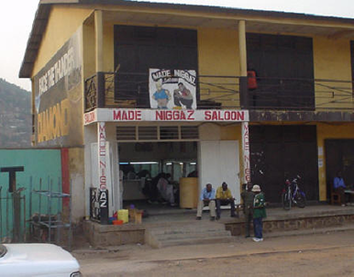
As one of the people at the table began to discuss the latest insight into Rwandan politics, I was completely distracted by a sign across the street.  Now, Rwandan advertising is a bit odd: most people cannot read and thus many if not all the adds are for Mizungus or elites, the images are boldly colored – frequently they are drawn with cartoons – and the phrases/jingles are quite funny - normally.  This time I was not amused.  As I sat there, basking in my mixed feelings about being in the motherland, sitting at a café in Africa with four white people, protected/guarded by black soldiers with machine guns at the premier establishment in the city which was run by a white Belgian guy, I was shocked to see a store called the “Made Niggaz Hair Saloon.”  Yeah, you heard me.  Ok, truth be told, I had seen some other saloons or salons: “The Nigga Boyz Hair Saloon,” “Niggaz on the cut”, “Head Niggaz” (not to be confused with the Head Nigga in charge), “Niggaz 'R US”, “Jungle Niggaz” and “Niggaz on the Prowl” but these observations were always made at about 60-70 miles an hour - screaming down the road from one place to another.  This one, however, was upfront and personal.  


Seemingly none of my associates noticed or cared to notice - likely dismissing it with the thought that “Niggaz here too.”  I was struck though to realize that Niggaz were in rural East Africa.  I felt betrayed, somehow embarrassed, curious and a little outraged.  One second I was sitting there, visiting Rwanda trying to represent - my family, my people, DC and then I had to see this thing.  No matter how far you go, it comes with you - “world Nigga law” as Mos Def would say.  I immediately thought of a line from the film Malcolm X that appeared to capture the moment pretty well, appropriately modified to fit the context: “we had a perfect trip until some Niggaz showed up and destroyed the whole thing.”  


No longer interested in my spaghetti bolognaise and banana beer, I excused myself, walked across the street between machine guns, 14 children calling out “my friend”, one cow, one jeep, 10 baskets, a bus and a man with no legs dragging himself across the street.  What the hell were these brothaz thinking?  What the hell were these brothaz doing?  I just had to check it out.  


As I walked up to the store, I saw the sign in greater detail.  It was straight old school ghetto, like the cover of some bad rap album or fake velvet poster.  Under the title, two brothaz kneeled down with parts in their fades, fat laces and a little gold chair in between them that they pointed to.  The message was clear.  If one wanted to get "made", then they would go in, sit down and be "brothered" or "brothad" (to be consistent with the phrase above).


Stepping up, two B-boys on either side stood up with Zig-Zag patterns shaved into their headz, fat laces and matching kangaroo jackets.  They appeared to be surprised at my presence - looking at me from the side, trying to figure out who I was.  I smiled, pushed open the door and stepped in like a Clint Eastwood film.  As the doors swung back and forth behind me with a screeching noise, all activity stopped like when Eddie Murphy walked into the Western bar in 48 hours.  There we were: me, five people getting shaved/cut/shaped, five barbers, eight people waiting, one cassette DJ and 11 Hip-Hop posters from the '80s (Tupac, Public Enemy, Run DMC and Kwame - the polka dot rapper).  I stood there in my B-boy stance, trying to take it all in and what was at first an awkward moment of silence and posturing, dissolved after I identified myself with “I am Chris from New York, what's up with you Niggaz?”  Actually, I was serious about the question.  There was no pause in between “what's up” and the rest of the sentence.  Nevertheless, they all laughed, the music started and we greeted each other in the middle of the dance floor (I mean shop).  


As DJ Innocent put on “I know you got soul” (by Eric B. and Rakim) two brothers brought me a chair, one brought me a coke and three brought a series of questions: “how big is New York compared to Butare”, “why are you here” and “do you have any music with you”?  I told them that there are probably 1000 Butares that could fit into “the City.”  I was there to study Rwanda and learn about its wonderful history. Note to efolks: never admit ones true purpose to someone who calls themselves a Niggaz with sharp objects all over the place.  And, finally, no I did not bring any music; something that I would never do again.


The next 30 minutes was a blur as they showed me haircuts they had, haircuts they were getting, haircuts they saw in old rap magazines from France and Belgium.  They had a copy of the Source - the black Hip-Hop magazine, which they treated like the Holy Grail.  DJ Innocent had to put on “Rappers Delight” to signify the occasion.  Several of the brothers started busting moves - old ones.  The head Niggaz walked me around the store to show me posters as well as other artifacts: afro picks, laces and hoodies.  


Near faint, I sat down in an empty chair on the left side of the store.  One of the barbers stepped beside me.  Someone brought me another coke.  Another pulled up a chair and several others sat around me on the floor.  It was like the “Chronicles of Riddick” and I had fallen into the chair of the king, holding court.  The faces of the brothers combined with those on the wall: Tupac, Biggy, Kwame (yeah, the polka dot guy), Rakim, Too Short and Fat Joe who stood out because it would have taken about five of the Rwandans to equal one of him.


Getting somewhat overwhelmed by the African time warp, it then hit me why it all seemed so familiar: this was no hair salon.  This was my room from 1985 - somehow migrated to Rwanda and spread out over the space.  I felt Sankofa-ed with a twist.  All that was missing was the Prince “Controversy” album cover on the wall; this is the subject of another story however.


At some point, the growing entourage stopped to ask if they were saying things by their right names.  At that moment, I became the “ghetto authenticator” - a Hip-Hop aficionado, come to their salon to give them the boogie down stamp of approval.  They brought out object after object, to hear the American label.  It kept coming as there was seemingly an endless stream of gear emerging from the back room.  For a second, I slowly came out of my fog, remembering where I was.  Under a Shante Moore mix, I heard some radio station with someone talking angrily.  Not Hip-Hop.  Real stuff.  Realer than real.  This only lasted for a second because seeing me, the back door was closed and I was back to authenticating.


All the buzzing and movement stopped, however, when I remembered why I had come into the store.  “I had a problem,” I said.  They all stopped mid-pop to hear me.  It was a KRS edutainment moment as I felt Malcolm, the Furious 5, Busy Bee, Cold Crush and SPoony-G course through me.  “You know that the word Niggaz is derived from Niggaz which is an insult from whites?  They did not.  “The “a” replacing the “er” was an attempt to shift the emphasis and actually empower the user but I think that the experiment failed.  Niggaz are now distortions, creations, parodies of the true state of Africans in America.  There might have been some true gangstas at some point and the hostility, the anger, the frustration in the music taps a certain aspect of the reality that blacks are subject to but what Hip-Hop has become, what you have on -the wall, what you look at, listen to and take in here is what a warped version of Hip-Hop has created.”  


They didn't hear me.  They couldn't.  I could not get across to them how one-dimensional the music they had was, how they missed Hip-Hop and how Hip-Hop missed them, needed them (desperately).  I couldn't tell them that they didn't need Niggaz over here - at least not the Niggaz they thought they needed. I couldn't tell them that there were really no Niggaz at all, just niggers and those that tried to survive.  I was saddened that all that made it over there was haircuts, some pictures, some really, really small medallions and corny rap songs - not even whole tapes but mixes at that.  They had no graffiti (no readily available spray paint and machine gun totting, fit police not donut-totting, slightly overweight ones), no break dancing (head spinning on rocks?), no Malcolm, no Baraka, no red, no black but plenty of green.


They looked at me, perplexed. A few started to whisper and look at each other.  DJ Innocent, who had stopped playing music, frantically searched for something to change the mood.  One brother walked up, B-Boy stride and said, “You don't like our shop?”  Trying to be honest but sensing the tension, “I said no, I love what you have here.  In fact, you have brought me a strange ray of hope.  Mos Def said once that “the Invisible Man got the whole world watching” and you all have shown that.  The reference was lost.  They were still in the 80's maybe the late 70's and barely.  “I just don't like what you have named your store.”  “But, we are Niggaz,” they replied.  “The Made Niggaz,” several chimed in with pride (some B-Boy stances returning).  


As if on cue, one of my colleagues from across the street walked in and in a second, the place transitioned into something else, somewhere else.  The Niggaz went back to their corners, the eyes glazed over.  Hair cutting resumed, the dancing was replaced with sitting, and DJ Innocent turned his back and put up his hoodie.  The openness, excitement and smiles that I saw just seconds ago turned to the then standard Rwandan scowl.  We wear the mask that grins and lies in Rwanda too.


My associates told me that they had finished and were about to walk back to the hotel - something that you did not want to do alone.  We were also leaving the next morning and I had to pack.  I tried to say goodbye to the brothas in the saloon but once again I could see that I was Mizungued - pulled away by otherness.  On the way out, DJ Innocent had evidently found what he was looking for.  As I pushed the swinging doors to exit and step through, I heard Run DMC saying, “It's like that and that's the way it is.”  Ain't it the truth, I thought.  Ain't it the truth?  


I left thinking that I needed to construct a Hip-Hop educational packet with some African American history to help.  Forget bandaids and old laptops.  These brothers needed some Kool Herc and Funk Master Flex - STAT!  They needed the Klan (the X variety not the Ku Klux one).  The repackaged Zulus.  


Of course, just as I thought of it, driving by a few dozen kids sifting through trash, the stupidity of the whole thing came back to me.  What these brothers and sisters really needed was something more basic: some food, a place to live, some regular education with readin', ritin' and rithmetic’ - The same stuff that all brothas and sistas need (just realized that I saw no women in the shop/saloon).  


As we pulled away, I realized that no matter how far you go, you always home - kinda.  Keep your heads up brothas. Let some sistas in.  

1 Comment

    Analog - The Anti-Blog

    By "Analog" I am referring to the adjective (i.e., relating to or using signals or information represented by a continuously variable physical quantity such as spatial position or voltage) and not the noun (i.e., a person or thing seen as comparable to another) for I wished to give voice to my thoughts which have come to me in a more or less continuous manner but which do so in a way that is not consistent in content or form. Thus you will see short stories, brief thoughts, haikus, low-kus and even a political cartoon or two. 

    Winner of Best Blog Post for 2014 by International Studies Association

    Picture

    Archives

    December 2025
    May 2024
    April 2024
    November 2023
    December 2022
    October 2022
    March 2022
    February 2022
    May 2021
    April 2021
    January 2021
    August 2020
    July 2020
    June 2020
    May 2020
    May 2019
    April 2019
    March 2019
    May 2018
    April 2018
    March 2018
    February 2018
    January 2018
    July 2017
    June 2017
    May 2017
    April 2017
    March 2017
    February 2017
    December 2016
    November 2016
    October 2016
    September 2016
    July 2016
    June 2016
    April 2016
    March 2016
    February 2016
    January 2016
    December 2015
    November 2015
    September 2015
    June 2015
    May 2015
    April 2015
    March 2015
    December 2014
    September 2014
    March 2014
    February 2014
    January 2014
    December 2013
    November 2013
    October 2013
    September 2013
    August 2013
    July 2013
    June 2013
    May 2013
    April 2013
    March 2013

    Categories

    All
    Activism
    Art
    Black Power/nationalism
    Communication
    Counter-terrorism
    Data
    Database
    Education
    Elitism
    Ethnicity
    Fashion
    Friends
    Genocide
    Global Blackness
    Hip Hop
    Human Rights Violation
    Identity
    India
    Inequality
    Memories
    Norway
    Passing
    Political Conflict
    Political Tourism
    Political Violence
    Poverty
    Racism
    Republic-of-new-africa
    Research
    Revolution
    Rwanda
    Sexism
    Social Media
    State Repression
    Struggle
    Terrorism
    Travel
    United States
    Untouchability

    RSS Feed

Picture